
The best workwear jewelry supports your day rather than competing with it. A necklace that looks elegant in a mirror may swing into a desk; a striking ring may feel cumbersome after an hour of typing. Choosing well means considering appearance, movement, workplace rules, and care together. Start with what you actually do between arriving and leaving, then select pieces that remain comfortable through those activities. Polish comes from coherence, not from wearing more.
There is no universal formula for workwear jewelry because working environments differ. A client-facing office, a home studio, a busy classroom, and a clinical setting place different demands on accessories. Even within one workplace, a presentation day may call for something different from a day spent unpacking deliveries. The aim is a manageable rotation with clear reasons behind each choice, rather than a collection of pieces that only work with one outfit.
Begin with your tasks, not just the dress code
Before choosing workwear jewelry, check any written workplace requirements. Rules about dangling pieces, exposed necklaces, rings, or wrist accessories may reflect safety and hygiene needs rather than style preferences. Where machinery, food handling, laboratory procedures, or clinical duties are involved, ask the appropriate supervisor what is permitted. Do not assume that a small piece is automatically acceptable. A required restriction takes priority over an otherwise polished outfit.
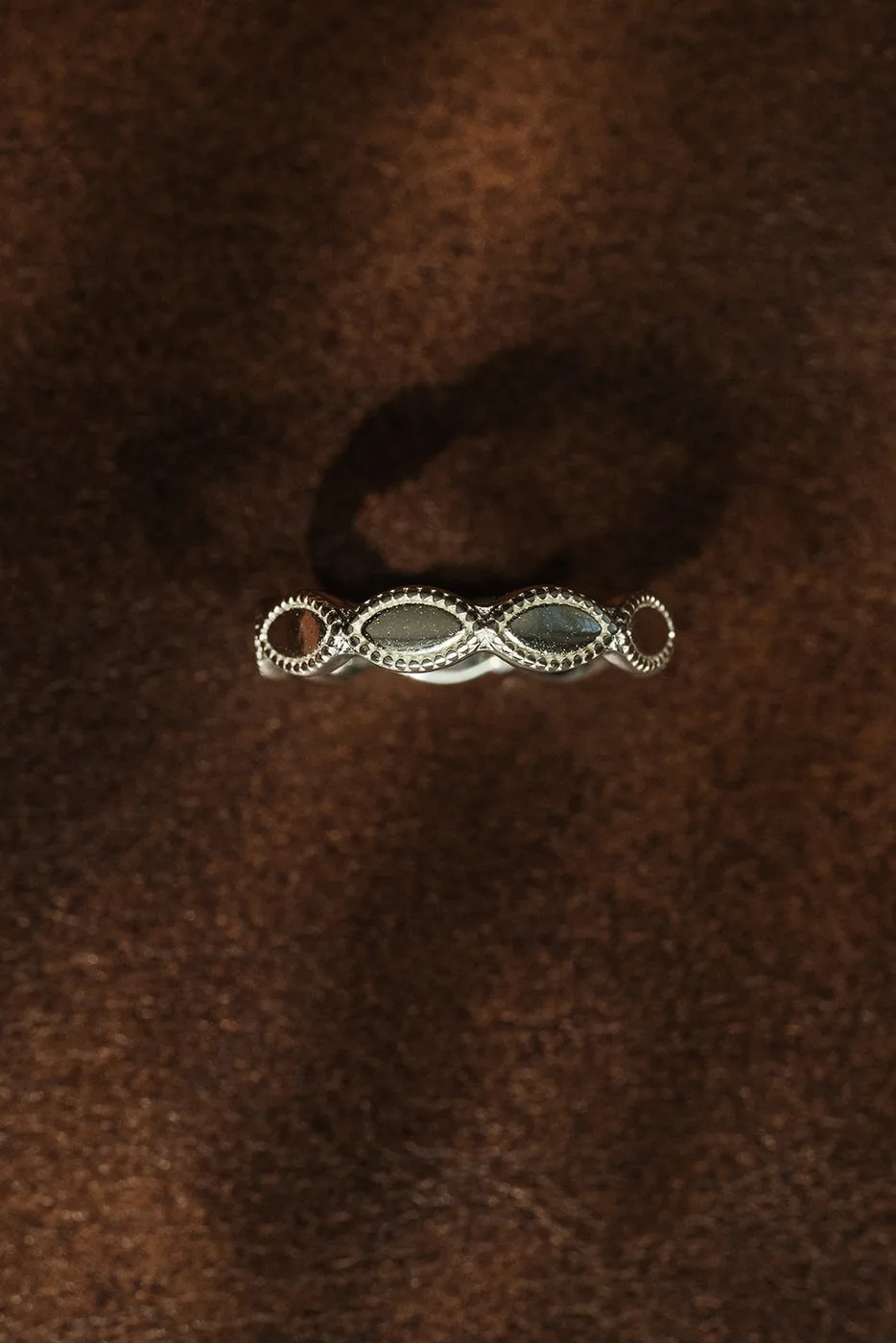
For desk-based workwear jewelry, think about where your hands and arms spend their time. A broad bracelet can press against a laptop edge, while a raised ring setting may catch when reaching into a bag. As an example, a smooth, low-profile ring and small earrings may be easier to live with than multiple wrist pieces. This is a practical starting point, not a rule that every office worker must follow.
Movement changes the brief for workwear jewelry. Someone teaching, giving demonstrations, or moving between rooms may prefer earrings that stay close to the ear and a necklace that does not swing freely. Check whether a pendant can slip outside your neckline when you lean forward. If you carry equipment or repeatedly put on a coat, consider whether clasps, chains, or projecting settings are likely to snag.
Sound is another useful test for workwear jewelry, especially during calls and concentrated work. Several bangles can create noise against a desk, and long earrings may brush a headset. Try your intended combination while wearing your usual headphones, glasses, and work clothing. Turn your head, type, and reach across the table. A few minutes of realistic movement can reveal a problem that standing still in front of a mirror will miss.
- List the tasks you repeat most often, including any protective clothing you wear.
- Identify contact points: keyboard, headset, sleeves, bag straps, and desk edges.
- Choose one piece to test through those movements before adding another.
- Keep a secure place to put jewelry if a task requires removal.
A simple system makes adjustments easier. Keep one combination for ordinary days and another for days involving visitors or presentations. If your responsibilities change during a shift, decide in advance which pieces can stay on and which must come off. Removing jewelry should not leave it loose beside a sink or in an open pocket where it can be forgotten.
Use proportion and repetition to create polish
Good workwear jewelry relates to the lines already present in an outfit. A sharp collar, a softly draped blouse, and a crew-neck knit each frame the face and chest differently. With a busy neckline, earrings alone may provide enough detail. With a plain top, a modest pendant can create a focal point. Check the full outfit rather than judging each piece separately; attractive individual choices can still compete when combined.
Scale matters more than any fixed number of accessories. For restrained workwear jewelry, choose one feature to lead and let the others stay quieter. As an example, sculptural earrings might work with a plain ring and no necklace. Alternatively, a noticeable pendant could pair with small studs. This approach gives your eye somewhere to settle without requiring every piece to match in shape, finish, or size.
Metal mixing can suit workwear jewelry when it looks intentional. Repeating each color once is one option, but it is not compulsory: a two-tone watch can also bridge contrasting pieces. Pay attention to finish as well as color. A very bright polished surface and a deeply textured matte surface create more contrast than two similarly finished metals. If the outfit already has prominent buttons or buckles, include those in your visual assessment.
For video meetings, evaluate workwear jewelry through the camera you actually use. Fine details may disappear, while reflective surfaces can catch light more strongly than expected. Try a short preview in your normal lighting, sitting at your usual distance. Earrings can be visible without needing to be large. Avoid treating the screen as a reason to abandon comfort; a piece that distracts you throughout the meeting is not helping your presentation.
Clothing texture also influences the result. A delicate chain may disappear against a chunky knit or catch in an open weave. A pendant placed just above or clearly below a neckline often reads more deliberately than one resting awkwardly on the edge. Explore the everyday jewelry showcase for visual starting points, then judge any style against your own wardrobe and tasks rather than assuming a pictured combination will translate directly.
Choose materials with realistic expectations
Material decisions for workwear jewelry should balance appearance, maintenance, and your history of wearing jewelry comfortably. Ask what the base metal is, whether a surface coating is present, and what materials touch the skin. A color description such as gold-tone does not identify composition. If you have experienced irritation, avoid assuming that an unfamiliar piece will suit you; obtain specific material information and seek appropriate professional advice where needed.
Descriptions used for workwear jewelry deserve careful reading. Sterling silver is at least 925/1000 silver, but a stamp alone is not proof of authenticity or a complete account of a piece's construction. Gold-filled is not solid gold. Vermeil descriptions have specific conditions under U.S. FTC guidance and should not be treated as a general synonym for gold-colored jewelry. Ask for plain-language clarification when terminology leaves you unsure about what you are considering.
Daily contact creates tradeoffs for workwear jewelry. Rings and bracelets typically encounter more surfaces than earrings, so projecting details and coated finishes deserve particular consideration there. No material label makes a piece immune to wear, and appearance alone cannot establish how a setting will perform. Look for clear care guidance and examine edges, clasps, and settings where possible. If maintenance would be difficult within your routine, a simpler design may be the more practical choice.
Meaningful workwear jewelry needs the same practical assessment as any other accessory. A sentimental pendant may feel appropriate beneath a blouse, but its construction and care requirements still matter. If you are considering a cremation or breast-milk keepsake, review the cremation jewelry information or breast-milk keepsake information without assuming suitability for daily wear. Before sending anything, obtain written instructions and applicable local information. There is no need to hurry a personal decision.
For any piece shown by D LOVE JEWELRY, use email consultation to clarify materials and care rather than treating a photograph as a technical specification. Ask the brand to confirm current details, including dimensions, composition, finish, and any relevant use limitations. A useful question is, “Would this design be appropriate for frequent typing and occasional handwashing, and when should it be removed?” The answer should inform your choice, not replace your workplace's rules.
Build a small rotation and a careful routine
A useful workwear jewelry rotation starts with combinations, not a target piece count. Assemble one quiet option for an ordinary working day, one slightly stronger option for presentations, and one minimal option for movement-heavy duties where jewelry is permitted. You may be able to create all three with the same earrings and two different necklaces. Reuse is a strength when the pieces genuinely fit your clothes and responsibilities.
Prepare workwear jewelry alongside your clothing the night before. Check that an earring back is present, a clasp closes properly, and nothing appears bent or loose. If a stone moves or a setting seems damaged, set the piece aside until it can be assessed. Keep alternatives simple: a reliable pair of small earrings is more useful on a rushed morning than an elaborate combination requiring repairs or repeated adjustment.
Care for workwear jewelry according to its specific materials, not a universal cleaning recipe. Chemicals, fragrance, chlorine, heat, and unsuitable ultrasonic cleaning can harm some jewelry, including pearls, delicate gems, and organic or resin-based pieces. Apply fragrance before putting jewelry on and let the skin dry. Do not assume that hand sanitizer, cleaning spray, or a shared ultrasonic device is harmless. The GIA jewelry care guidance offers useful general precautions, but piece-specific instructions still matter.
At day's end, give workwear jewelry a consistent resting place. Separate pieces so chains do not tangle and hard surfaces do not rub against more delicate ones. Follow the relevant guidance before wiping or cleaning, especially for mixed-material designs. Notice recurring problems: a chain that catches every Tuesday's knitwear or a ring that presses during long reports is telling you something. Change the combination rather than expecting yourself to ignore the discomfort.
The most polished result is often the least distracting one. Your accessories should feel deliberate when you arrive and still manageable when you leave. Review your rotation after several working days, keeping the combinations that stay comfortable and removing those that demand constant attention. A working wardrobe does not need jewelry for every possible occasion; it needs dependable choices that respect your tasks, your preferences, and the care each piece requires.