
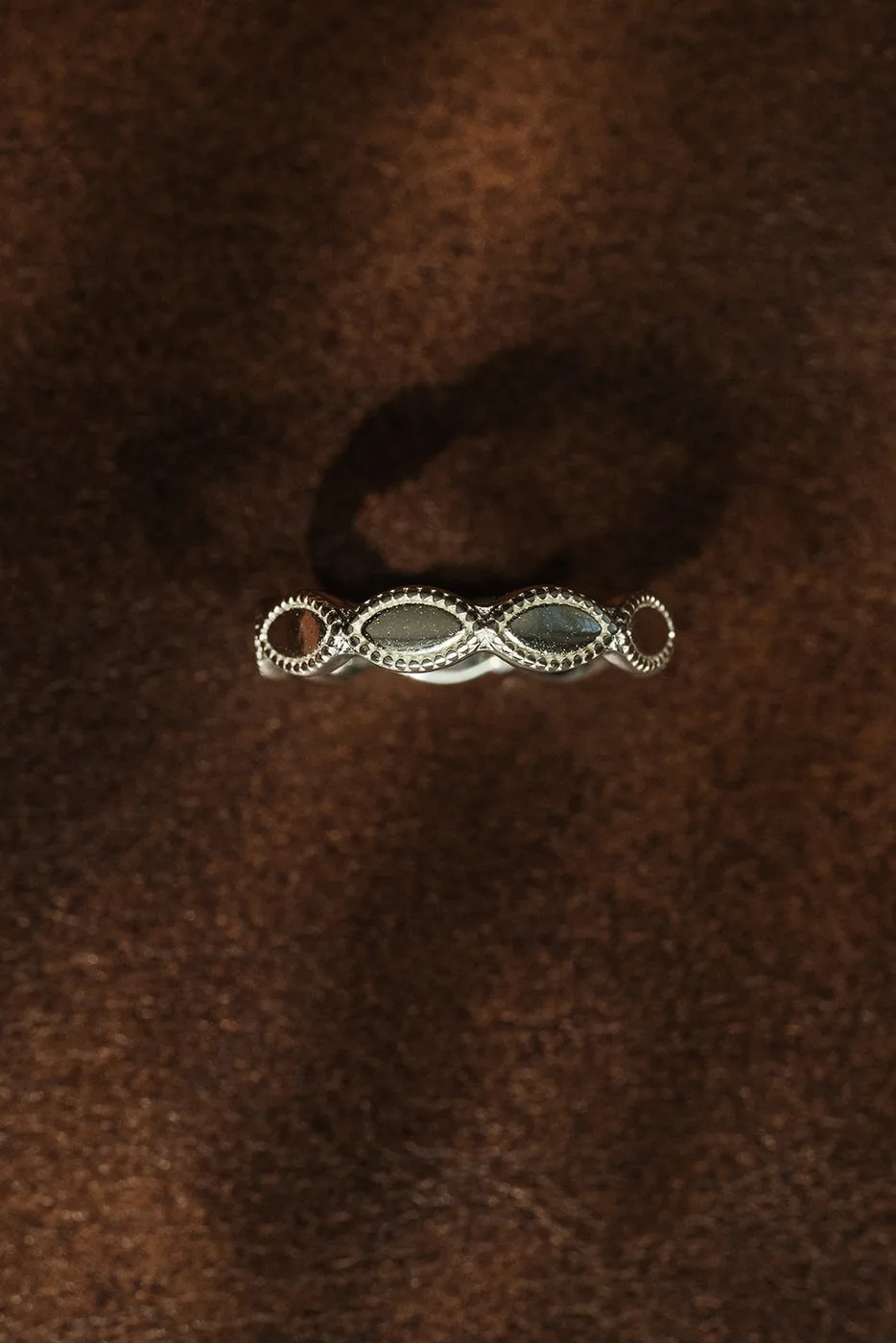
Choosing sterling silver jewelry becomes easier when you separate three questions: what the metal contains, how the surface is finished, and what else the piece includes. A simple silver chain and a silver pendant containing a pearl may share the same metal designation but need different care. Understanding those distinctions helps you judge descriptions, ask useful questions, and avoid cleaning mistakes that can change a piece permanently.
The appeal of sterling silver jewelry is practical as well as visual: it offers a silver-rich material with more strength than pure silver, while still requiring thoughtful handling. It can tarnish, scratch, or bend under enough force. None of those possibilities automatically makes it a poor choice. The important decision is whether its care requirements fit your habits, particularly if you want a ring or necklace for frequent wear.
What 925 means—and what it cannot tell you
In U.S. jewelry guidance, sterling silver contains at least 925 parts silver per 1,000 parts by weight, equivalent to 92.5 percent. Other metals make up the balance; copper is common, but the precise composition should not be assumed. Pure silver is relatively soft, so alloying improves suitability for many wearable designs. When assessing sterling silver jewelry, treat 925 as a material standard rather than a promise of identical performance across every piece.
A stamp reading 925, .925, or sterling is useful information, but it is not independent proof of authenticity. Marks can be inaccurate or counterfeit, and legitimate pieces may have marks that are small, worn, or difficult to locate. A clasp stamp may also describe that component rather than resolve every question about the entire item. For sterling silver jewelry with uncertain origins, a qualified jeweler can advise whether examination or material testing is appropriate.
Surface treatments add another layer. Sterling can be polished, intentionally oxidized, or plated with another metal. A bright white appearance does not tell you whether the surface is bare silver or rhodium-plated, for example. Gold-colored sterling silver jewelry may have gold plating, but color alone does not establish its thickness or classification. Vermeil descriptions have specific FTC conditions concerning the silver base, gold fineness, coating thickness, and coverage; they are not interchangeable with every gold-plated finish.
Before comparing sterling silver jewelry, ask for the base-metal description and any coating or intentional patina. Also ask whether posts, clasps, connecting rings, or other components have different compositions. Material labels do not guarantee that a person will avoid a skin reaction. If you have known sensitivities, seek specific component information and appropriate professional advice rather than relying on words such as sensitive or hypoallergenic.
- For an uncoated piece: ask whether gentle polishing is suitable and which details should be avoided.
- For a plated piece: ask how to clean it without thinning the coating and whether future refinishing is possible.
- For an oxidized design: identify which dark areas are intentional before attempting to brighten them.
- For a mixed-material piece: request care guidance for the most vulnerable material, not only the silver.
Choose a design that matches your daily routine
The suitability of sterling silver jewelry depends partly on construction. A fine chain may be comfortable but vulnerable to pulling; a broad ring can resist some bending yet show surface scratches clearly. Hollow forms may dent differently from solid ones. As an example, someone who handles boxes all day might prefer to remove a ring during work rather than expect a substantial-looking design to withstand repeated impacts.
Think about contact points when evaluating sterling silver jewelry. A bracelet can knock against a desk, a necklace can catch on clothing, and earrings may be exposed to hair products. Settings also matter: raised prongs can snag, while recessed details can collect soap and lotion. These are design tradeoffs, not automatic defects. Inspect photographs closely and ask about dimensions and construction when a detail is unclear.
For frequent wear, sterling silver jewelry benefits from a realistic removal routine. Take pieces off before swimming, bathing, heavy cleaning, or activities that involve strong impacts. Chlorine and household chemicals can damage jewelry, while sweat and residues may contribute to surface changes. Apply fragrance, lotion, and hair products first, let them settle, and put jewelry on afterward. Remove it before using products that might spray or spill onto it.
Consider maintenance tolerance alongside appearance when choosing sterling silver jewelry. If you enjoy a bright finish, occasional gentle polishing may be part of ownership. If you prefer an intentionally darkened design, brightening every recess may undermine its character. Use the everyday jewelry showcase to consider styles, and the collection overview to compare visual directions, without assuming that a pictured piece has a particular finish or current availability.
A useful comparison is a plain band versus a pearl-set ring. The plain band may allow straightforward surface care, subject to its finish. The pearl-set ring requires restraint because the pearl and its attachment can be more vulnerable than the silver. Neither example describes a specific D LOVE JEWELRY product. The lesson is to evaluate the complete object, including stones, adhesives, and decoration.
Clean tarnish gently, without treating every piece alike
Tarnish on sterling silver jewelry is usually a surface reaction involving sulfur-containing substances in the environment. It may appear yellowish, brown, gray, or dark. Humidity, cosmetics, and storage conditions can influence how quickly it develops, but timing varies. Tarnish is different from dirt, coating wear, and deliberate oxidation. If the appearance changes unexpectedly, identify the finish before deciding that stronger cleaning is the answer.
For uncomplicated, uncoated sterling silver jewelry without delicate additions, start with the least aggressive approach. Wipe with a clean, soft cloth. If the maker's guidance permits washing, use a little mild soap in lukewarm water, rinse carefully, and dry thoroughly with a soft cloth. Work over a bowl rather than an open drain. Do not assume that permission to wash a plain chain applies to a pendant attached to it.
A silver polishing cloth can help remove light tarnish from suitable sterling silver jewelry, but many such cloths contain polishing compounds. Use light pressure and avoid pearls, delicate gems, resin, plated surfaces, and intentional darkened details unless their care instructions explicitly permit it. Excessive polishing removes material gradually and can soften fine surface details. A small amount of discoloration remaining in a recess may be preferable to an altered finish.
Avoid treating sterling silver jewelry with toothpaste, abrasive powders, or improvised chemical baths. These methods can scratch surfaces or affect coatings and attached materials. Commercial silver dips also require caution: they are not universal jewelry cleaners. Ultrasonic cleaners can loosen or damage some settings and harm certain gems or other components. Steam and high heat are likewise unsuitable for many pieces. Seek material-specific guidance before using any machine or chemical treatment.
- Inspect first: look for loose stones, damaged links, cracks, peeling coatings, or an uncertain finish.
- Remove loose residue: use a soft, clean cloth without scrubbing vulnerable details.
- Clean only as permitted: follow instructions for the whole piece, keeping treatment away from incompatible components.
- Dry and reassess: check the result under good light rather than repeating stronger treatments immediately.
- Stop when unsure: ask a qualified jeweler about persistent discoloration or structural problems.
If a clasp no longer closes securely or a stone moves, cleaning should wait until the problem is assessed. Polishing cannot repair a weakened connection. Similarly, a gold-colored surface becoming patchy may indicate coating wear rather than removable tarnish; scrubbing harder can make the difference more obvious.
Store thoughtfully and ask precise care questions
Store sterling silver jewelry clean and fully dry, with pieces separated to reduce rubbing and tangled chains. A soft pouch or divided jewelry box can protect surfaces, while an appropriate anti-tarnish storage product may help limit exposure. Follow that product's instructions, especially for mixed materials. Avoid damp bathrooms and locations exposed to heat or direct sunlight. Storage slows some changes; it does not make silver permanently tarnish-free.
Regular attention to sterling silver jewelry can be brief: check the clasp, look at connecting rings, and wipe away residues after wear. Do not pull a knot tight or force a bent clasp closed. For pieces worn only occasionally, inspect them before putting them on rather than discovering a weakness during an outing. Keep any confirmed material and care information with the piece so that future cleaning decisions are based on facts.
For sterling silver jewelry incorporating memorial or breast-milk keepsake elements, the silver designation does not establish how the inclusion should be cleaned. Organic or resin-based components may need different handling, and soaking, heat, chemicals, or ultrasonic cleaning may be unsuitable. If exploring a keepsake, use the cremation keepsake information or breast-milk keepsake information as a starting point, then obtain written instructions and applicable local information before sending any material.
The most useful questions about sterling silver jewelry are specific: Is the piece coated? Which cleaning methods are permitted? What should stay dry? Are all components described by the same metal label? For a design shown on this site, contact D LOVE JEWELRY for current details rather than assuming composition, availability, or care support. A clear answer lets you choose a piece whose appearance and upkeep make sense for your life.