
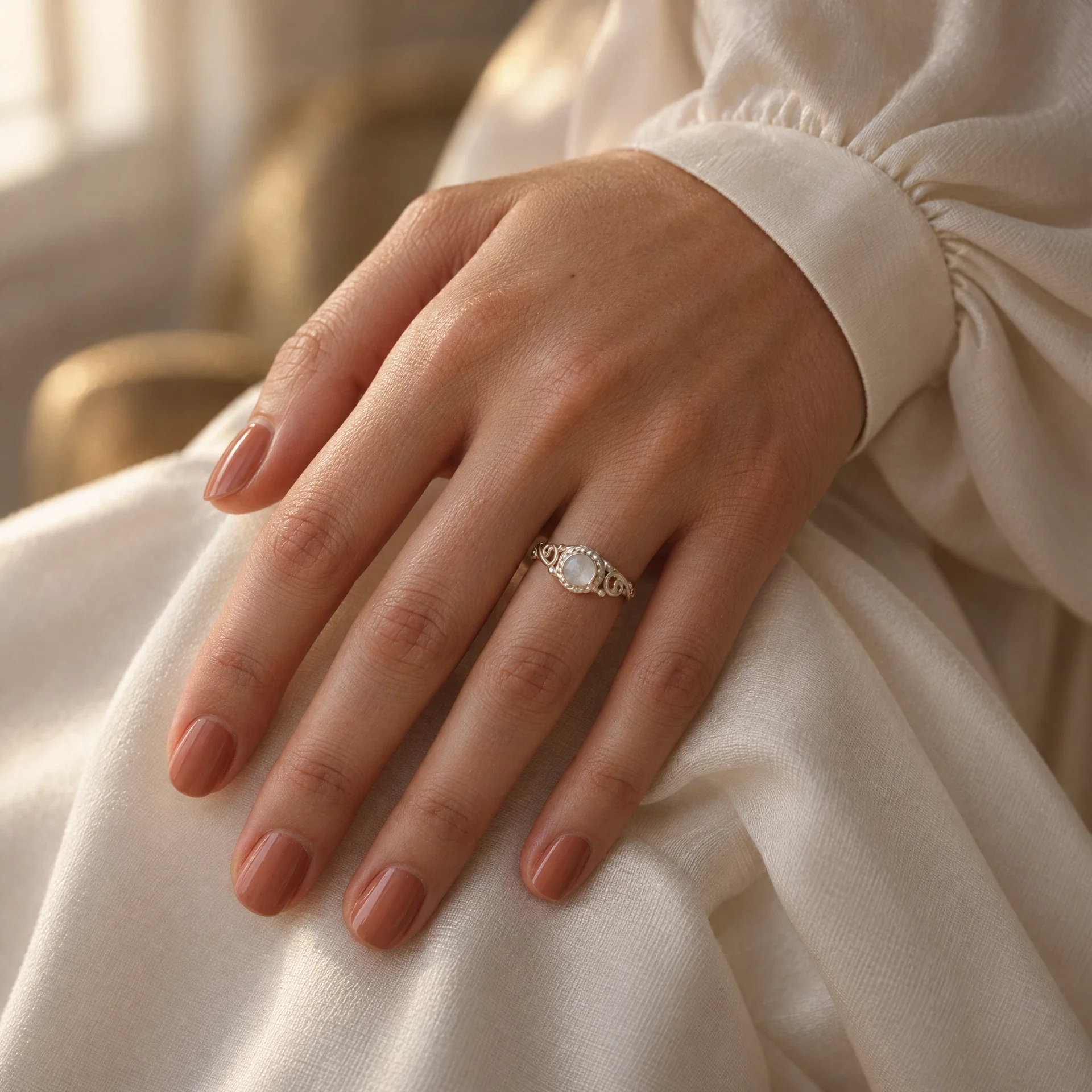
Breast milk jewelry is a personal keepsake that incorporates a small amount of milk into a jewelry element, often through a preservation and encapsulation process. The meaning can be different for every wearer: a reminder of feeding, expressing, an unexpected transition, or simply a particular season of motherhood. It does not need to represent a long or uncomplicated experience to matter.
Choosing breast milk jewelry involves more than selecting a pretty setting. You will want to understand the proposed materials, how your milk would be handled, what appearance is realistic, and whether the finished design suits your routines. This guide offers a way to compare options without assuming that every maker uses the same process. D LOVE JEWELRY is a showcase and email-consultation site; ask the brand to confirm current details rather than treating a displayed design as an available purchase.
Choosing Breast Milk Jewelry for Your Own Story
The best starting point for breast milk jewelry is the role you want the keepsake to play. Will it be worn occasionally, included in a small personal collection, or kept mostly as a memento? A piece intended for frequent wear raises different questions from one brought out for birthdays or family photographs. Neither choice makes the memory more meaningful.
Match the form to your habits
A pendant may be easier to keep away from handwashing and household tasks than a ring, although it can still encounter fragrance, perspiration, and clothing friction. A ring keeps the detail in view but receives more knocks and contact with surfaces. Earrings can feel unobtrusive, yet their size may make a subtle inclusion difficult to appreciate. These are design tradeoffs, not guarantees of suitability.
For example, someone who removes all jewelry before cooking might prefer a small pendant, while someone who enjoys ceremonial pieces might choose a statement ring for occasional wear. When comparing breast milk jewelry, consider the setting as carefully as the keepsake element: height, exposed edges, chain length, and fastening style all affect comfort and practicality.
- Visibility: Decide whether you want the keepsake recognizable or discreet.
- Scale: Check measurements rather than relying on enlarged photographs.
- Protection: Ask how much of the inclusion is exposed above the setting.
- Wear habits: Consider work, exercise, caregiving, and how often you remove jewelry.
Color is another personal decision. A pale, understated appearance may feel right to one person; another may prefer decorative shimmer or a contrasting background. Ask whether photographs show optional additions, and whether those additions affect care. Do not assume a pictured finish will be reproduced exactly.
You can explore the milk keepsake showcase to help describe your preferences. Use breast milk jewelry images as conversation starters, not evidence of a guaranteed result. There is no obligation to turn a feeding experience into an object, and a thoughtful decision can include waiting or choosing a different kind of memento.
Understanding the Inclusion, Metal, and Setting
Breast milk jewelry is not a single standardized material. Makers may use different preservation steps, binders, resins, decorative components, and assembly methods. An appealing photograph cannot reveal those details. Before deciding, ask what the keepsake element consists of, how it is secured, and which parts of the piece have separate care requirements.
Ask for a material description you can keep
Request a written description of the metal, surface finish, inclusion material, and any additional stones or pearls. A label such as “gold” is not enough to distinguish solid gold from a plated surface or a gold-filled construction. Gold-filled is not solid gold. In U.S. terminology, sterling silver is at least 925 parts per thousand silver, while vermeil descriptions must meet specific FTC conditions.
For breast milk jewelry, understanding the whole construction matters more than focusing only on the visible setting. A sturdy-looking metal surround does not establish the resistance of an organic or resin-based inclusion to heat, chemicals, or impact. Likewise, a hallmark can be a useful clue but is not, by itself, proof of authenticity or a complete material specification.
Ask how repairs would be assessed if the chain, clasp, setting, or inclusion developed a problem. Could work on the metal expose the keepsake to heat? Would replacement components change its appearance? These are questions to clarify with the relevant maker or jeweler, not services to assume D LOVE JEWELRY provides.
Set realistic appearance expectations
The appearance of breast milk jewelry may vary with the starting material and the process used. Ask whether the intended result is opaque, translucent, softly textured, or visually uniform, and whether examples show differences between finished pieces. Request clear photographs in ordinary light if available; bright studio lighting can make shimmer, surface texture, and scale harder to judge.
A useful comparison is between two hypothetical designs: a smooth pale oval in a simple bezel and a glitter-accented sphere in an open setting. The first may emphasize quiet simplicity; the second may emphasize decorative sparkle. Neither tells you how the inclusion was preserved. Keep the visual choice separate from questions about composition, cleaning, and handling.
If everyday wear is important, browse the everyday jewelry showcase to identify shapes you already find comfortable. Then ask whether a similar silhouette is appropriate for a keepsake inclusion. Familiar proportions can help you make a grounded decision without assuming equivalent durability.
Planning Breast Milk Jewelry Without Rushing
Before sending any material for breast milk jewelry, obtain written instructions from the party that would receive and handle it. Do not rely on quantities, preparation steps, or mailing advice found in a general article. Requirements can differ by process and location, and a method intended for one maker may be unsuitable for another.
Clarify applicable local rules and any restrictions relevant to transferring or transporting human milk. If a shipment would cross a border, ask which requirements apply before proceeding. The recipient should explain what they can accept and what information you need to verify independently. Do not send anything to an address inferred from a website or an old social post.
Questions worth resolving in writing
A clear breast milk jewelry consultation should leave you knowing what is proposed and what remains uncertain. You do not need technical expertise, but you should be able to distinguish a confirmed detail from an example or a possibility.
- Who would receive the material, and what written preparation and handling instructions apply?
- How would the material be identified and associated with the intended keepsake?
- What happens to any unused material, and what consent is requested?
- Which design details can be specified, and which natural variations cannot?
- What costs, timing, repair options, and other terms would need confirmation before commitment?
These questions do not establish that any particular handling system, customization option, or service exists. They help you decide what evidence you need. If the answers are incomplete, pause rather than filling in the gaps with assumptions.
For breast milk jewelry associated with a difficult feeding experience or the end of a chapter, a slower decision may feel more comfortable. You can write down what you want the object to represent before choosing its appearance. A date, a shape, or an understated color might be enough; a detailed symbolic design is not necessary.
If you are considering a gift, ask first whether the recipient wants this kind of keepsake. Do not request or transfer their milk without explicit agreement. A gentle offer to discuss possibilities is often more considerate than a surprise involving personal material. For brand-specific questions, use the D LOVE JEWELRY contact page and ask what current consultation details can be confirmed.
Care, Storage, and Long-Term Expectations
Care for breast milk jewelry should follow the specific inclusion and setting, not a generic rule for metal jewelry. Ask for written cleaning guidance before wearing the piece. If the proposed construction combines several materials, the most delicate component may determine what is safe for the whole item.
Reduce avoidable exposure
Chemicals, fragrance, chlorine, and heat can harm some jewelry, including delicate gems, pearls, and organic or resin-based pieces. Put jewelry on after personal-care products have been applied and keep it away from cleaning tasks. Avoid wearing it while swimming, bathing, exercising, or doing activities that expose it to repeated impacts or substantial heat.
Do not assume breast milk jewelry can tolerate an ultrasonic cleaner, steam cleaner, soaking, or a commercial polishing solution. A method suitable for one plain metal piece may be unsuitable for an inclusion or its attachment. Even a soft cloth should be used gently, and any uncertainty about residue or discoloration is a reason to ask before experimenting.
For storage, choose a separate compartment or soft pouch that limits rubbing against other items. Keep the piece away from direct sunlight and heat sources. These precautions reduce unnecessary exposure; they do not establish a storage life or guarantee that appearance will remain unchanged. Ask whether the maker recommends any more specific conditions.
Notice changes without trying home repairs
Inspect breast milk jewelry occasionally for loose components, rough edges, a damaged clasp, or visible changes in the inclusion. If something seems different, stop wearing it and request an assessment from an appropriate professional. Avoid household glue, sanding, solvents, or attempts to polish the keepsake surface, which could complicate an assessment or cause further damage.
Long-term expectations for breast milk jewelry should be explicit. Ask what changes might occur, which warning signs warrant attention, and what options would exist if the piece needed work. Do not interpret words such as “preserved” or “heirloom” as a promise of permanent color, indefinite service life, or repairability.
Ultimately, breast milk jewelry is most thoughtfully chosen when its emotional meaning and practical limits are both understood. Select a design you enjoy, obtain clear instructions before transferring material, and keep written care information with the piece. The keepsake can be quiet and personal; it does not need to carry expectations beyond what you and the confirmed materials can reasonably support.