
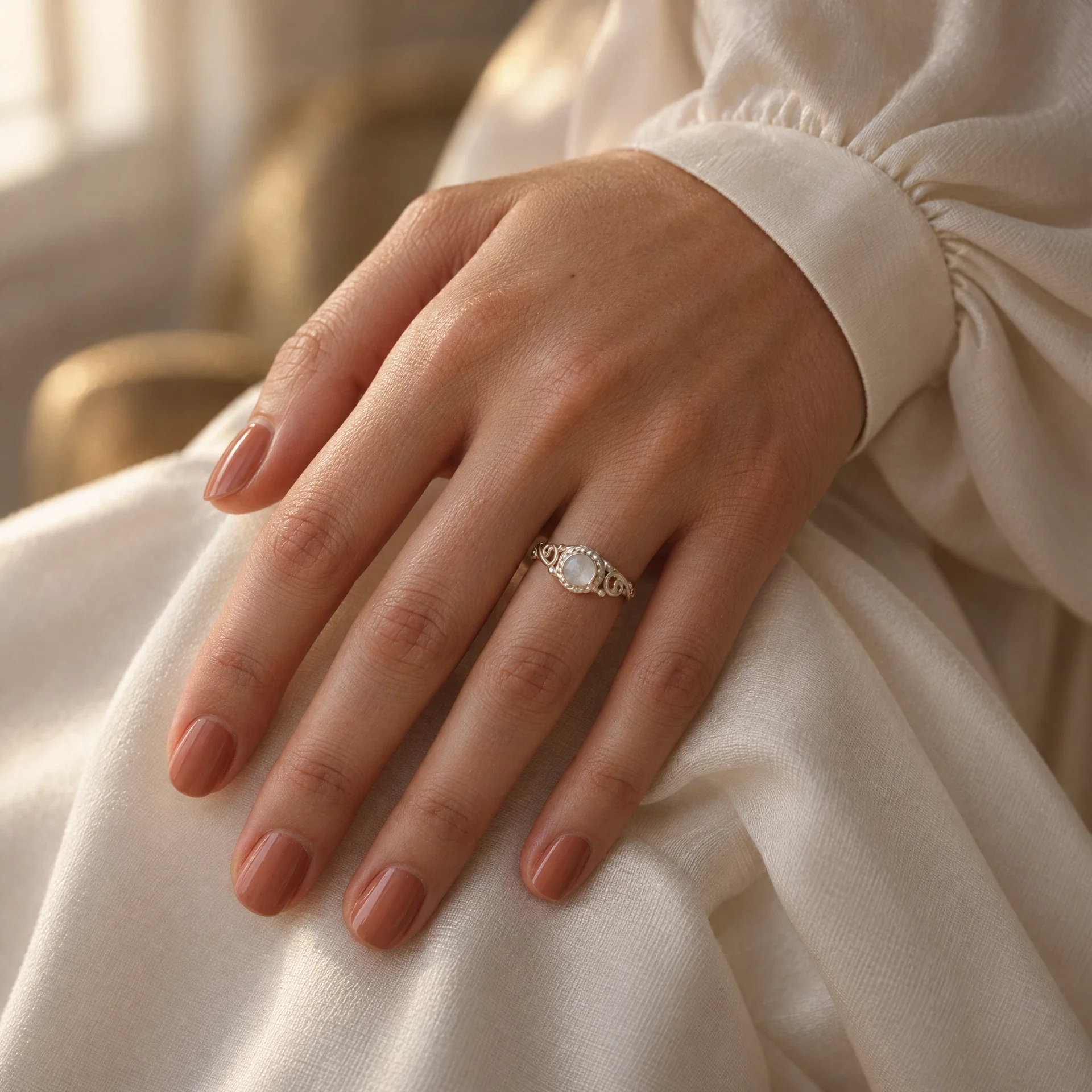
Choosing breast milk rings involves more than deciding which shape looks prettiest in a photograph. A ring sits against your skin, moves with your fingers, and meets the practical demands of your day. Its significance may be deeply personal, but its comfort still depends on ordinary details: width, height, balance, and fit. Start by separating two questions: what do you want the keepsake to represent, and how do you realistically expect to wear it? Neither answer needs to follow anyone else's example.
For some people, breast milk rings mark a feeding milestone; for others, they hold a quieter connection to a particular period of motherhood. There is no requirement to wear one daily or to explain its meaning. Before comparing designs, decide whether you imagine occasional wear, a place beside an existing band, or a standalone piece. The site's breast milk keepsake information can provide a starting point for consultation, but ask D LOVE JEWELRY to confirm current design options and any relevant practical details.
Choose a Shape That Fits Your Actual Routine
When comparing breast milk rings, begin with the outline of the centerpiece rather than its decoration. As a hypothetical example, a small round centerpiece may feel visually balanced on a narrow band, while an elongated oval can create a more noticeable focal point without increasing width across the finger as much. Neither shape is automatically more comfortable. Ask for the centerpiece's dimensions and the overall height above the finger, because a close-up photograph can make a modest design look much larger.
The setting profile of breast milk rings matters whenever your hands pass through sleeves, pockets, or gloves. A low profile may be less intrusive, but the exact edge shape and surrounding metal still affect contact. A raised design can offer a distinct silhouette while also requiring more attention around knitwear or crowded storage. Ask whether there are projecting details, exposed edges, or areas likely to catch. Do not assume that a smooth-looking image guarantees a snag-free experience in everyday use.
Think about visual weight when considering breast milk rings alongside jewelry you already wear. A broad centerpiece on a very slender band can look striking, yet may feel less balanced if the fit allows it to turn. A wider band can create a more unified appearance, though it occupies more space between adjacent fingers. For example, someone who dislikes finger-to-finger contact might prioritize a narrower underside even when choosing a substantial top. Confirm the actual band shape rather than judging only the front view.
Decorative details on breast milk rings should support your preferences, not create obligations. Extra stones, textured shoulders, or an ornate surround may suit occasional dress wear, but can introduce additional cleaning areas and inspection needs. A simpler outline may be easier to coordinate with existing jewelry, without being inherently more durable. Browse the collection showcase for visual reference, then ask which details can currently be discussed. Treat every example as a design reference, not a promise of availability or a confirmed customization option.
Measure for Comfort, Not Just a Number
Sizing breast milk rings starts with choosing the intended finger and hand. A familiar size from another finger, or even the opposite hand, is not necessarily transferable. Have that finger measured with a proper ring gauge when possible, and describe the width you are considering. Your target is a fit that passes the knuckle with some resistance and rests comfortably at the base. It should not feel painfully tight or seem ready to slip off during ordinary movement, although comfort can vary through the day.
Band width changes how breast milk rings feel at the same nominal size. A broad band covers more skin than a narrow one and may need a different fitting assessment; do not apply an automatic numerical adjustment. Internal shape also matters: a rounded interior and a flatter interior can feel different. Ideally, try a sizing band close to the proposed width and profile. If you cannot, explain that limitation during consultation and ask how much confidence the available measurement provides before making a decision.
A single hurried measurement is a weak basis for breast milk rings, especially when your fingers are temporarily warmer or cooler than usual. Check fit on more than one ordinary day, without deliberately heating or cooling your hands. If your size is changing during a period of bodily change, consider postponing a final choice rather than guessing ahead. Persistent swelling, pain, or other health concerns belong with an appropriate healthcare professional; jewelry measurements cannot explain or resolve them. Comfort should take priority over meeting a milestone date.
Before settling the size of breast milk rings, ask whether the proposed design can be resized and what restrictions apply to its centerpiece, setting, and band. Some ring constructions limit later adjustments, and an alteration may require more than changing the metal circumference. Do not assume a keepsake element can be removed, replaced, or preserved during that work. Request written clarification of any applicable arrangements from D LOVE JEWELRY. Knowing the limits early helps you decide whether to wait, measure again, or choose a different design direction.
Clarify Materials, Appearance, and Stacking
Material descriptions for breast milk rings should distinguish the metal from the keepsake component and from any surrounding stones. Ask for the stated metal composition, any plating or coating, and the nature of the centerpiece. Breast milk content does not by itself tell you what binds, encloses, or protects that component. Do not infer a particular preservation or manufacturing method from a photograph. If you have material sensitivities, request specific composition information and seek appropriate professional advice rather than relying on broad claims such as “gentle” or “suitable for everyone.”
When evaluating metal labels for breast milk rings, keep important distinctions intact. Gold-filled is not solid gold. Sterling silver is at least 925 parts silver per 1,000, while vermeil descriptions have specific U.S. Federal Trade Commission conditions and are not interchangeable with every gold-colored coating. A hallmark may offer information, but it is not proof of authenticity on its own. Ask for a clear written description of the proposed material, including what any fineness number refers to, instead of treating color or a stamped mark as conclusive.
The appearance of breast milk rings deserves careful discussion because screen images cannot establish an exact finished color or surface effect. Ask what variation may be expected, whether reference images illustrate a general look, and whether any proposed additions would alter translucency or contrast. For example, a pale centerpiece beside warm-toned metal may read differently from the same general tone beside silver-colored metal. Avoid treating that comparison as a guaranteed result. Decide whether natural-looking variation would feel welcome or whether a very specific visual expectation needs further clarification.
If you plan to stack breast milk rings, evaluate the combination rather than each piece separately. A neighboring band may touch the centerpiece, press against a setting, or leave a gap you did not anticipate. Two rings that fit individually can also feel tighter when worn together. As an example, a curved companion band might follow a raised centerpiece's outline, but its compatibility still depends on exact dimensions. Use the everyday jewelry overview for broader styling context, and ask about contact points before assuming two designs are suitable neighbors.
Plan for Care and a Clear Consultation
A realistic care plan for breast milk rings begins with recognizing that the metal and centerpiece may have different needs. Chemicals, fragrance, chlorine, heat, and unsuitable ultrasonic cleaning can harm some jewelry, including delicate gems and organic or resin-based components. Do not assume a cleaning method appropriate for a plain metal band is appropriate for the complete keepsake. Until you have design-specific instructions, avoid experimenting with household cleaners, steam, soaking, or mechanical cleaning. Ask what cleaning steps, if any, are recommended for the exact proposed piece.
Deciding when to remove breast milk rings is part of choosing a wearable design, not an admission that you chose poorly. Consider tasks involving water, cleaning products, repeated impacts, or strong gripping, and follow the maker's confirmed guidance. Plan a secure resting place before taking a ring off so it does not end up beside a drain or loose in a bag. If the setting shifts, the surface changes, or an edge begins catching, stop wearing it and seek assessment rather than attempting a repair yourself.
Consultation about breast milk rings should cover the keepsake material as carefully as the fit. Before sending anything, obtain written instructions addressing what is needed, preparation, labeling, permitted handling, and the appropriate destination, together with applicable local information. Do not rely on someone else's quantities or mailing advice, and do not assume older instructions remain current. If your available material is limited or especially meaningful, ask what would happen to unused material and what limitations apply. Confirm those details before deciding whether you feel comfortable proceeding.
The most useful next step for breast milk rings is a focused, unhurried conversation. Through the D LOVE JEWELRY consultation contact page, you can ask about current details without assuming the showcase is an online shop. Bring your intended finger, measured size, preferred width, existing ring dimensions, and a short description of your wearing routine. Ask what remains uncertain, including care and resizing. A meaningful choice can be simple, elaborate, worn occasionally, or postponed; the right decision is the one whose practical requirements you understand and accept.