
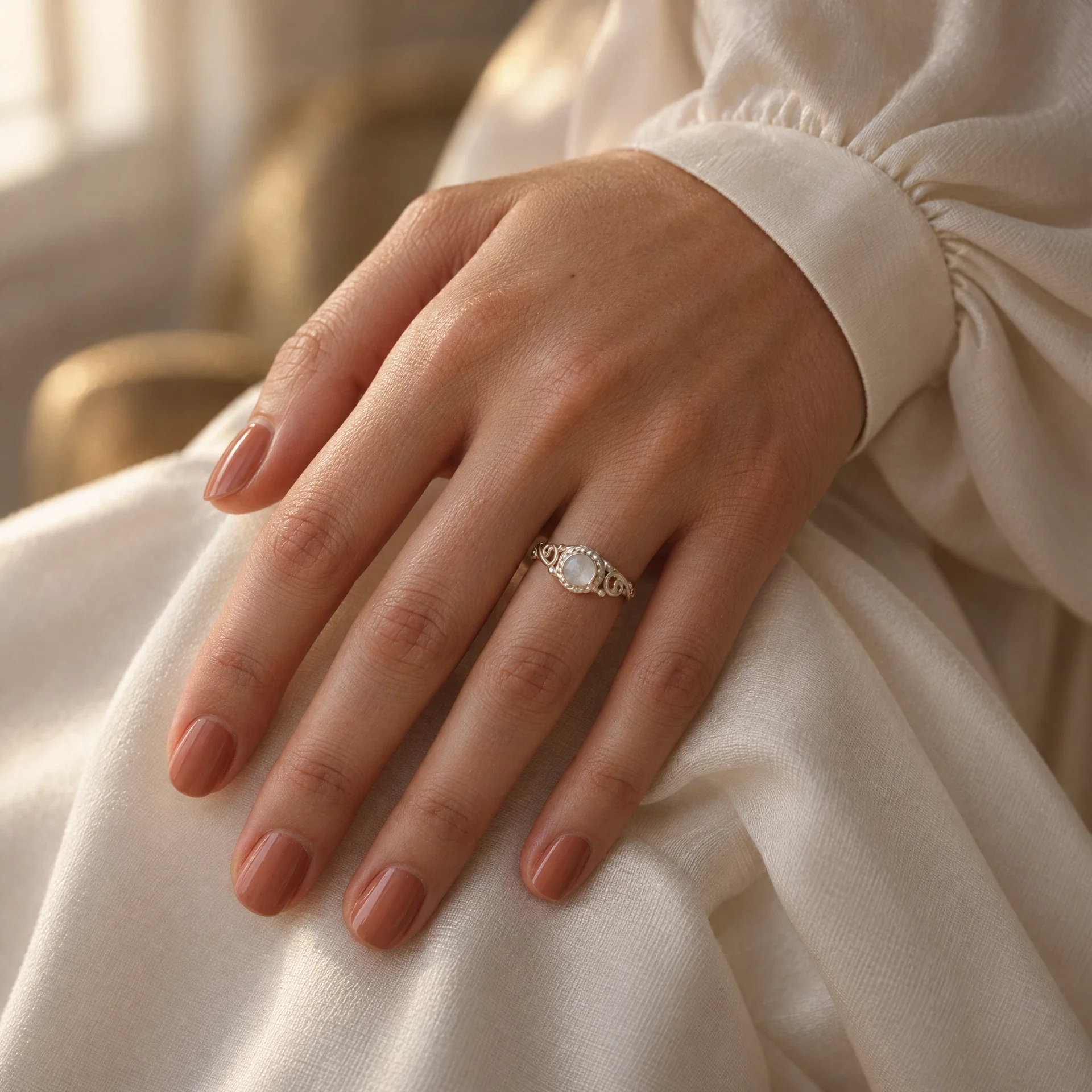
Choosing breast milk necklaces starts with a personal question: what would you like this piece to hold in your life? It might acknowledge feeding, expressing, a difficult beginning, a brief experience, or a chapter that lasted longer than expected. None of those stories needs a particular shape or level of ornament. A meaningful design is one you recognize as yours, whether other people understand it or not.
The most useful way to compare breast milk necklaces is to separate emotional meaning from practical construction. Decide what you want to see, how often you expect to wear it, and what information you need before committing. You do not have to choose immediately, explain your feeding history, or turn a private experience into a public statement. A quiet pendant can be just as intentional as an elaborate one.
Start with the meaning, then choose the shape
Before browsing breast milk necklaces, write a short sentence about what you want to remember. For example, “I want to mark the time we spent together” suggests a different visual direction from “I want to celebrate reaching a milestone.” This sentence is not an engraving instruction. It is a filter that helps you distinguish a design you genuinely connect with from one that simply photographs well.
Shape changes the emotional tone. A round pendant can feel balanced and understated; an oval may create a softer, elongated silhouette. A heart makes the symbolism more explicit, while a teardrop can carry several interpretations. These are personal associations, not universal meanings. If one shape brings up an unwelcome feeling, you do not need to adopt someone else's interpretation of it.
When comparing breast milk necklaces, consider how visible you want the keepsake element to be. A larger central area may make it the focus, while a smaller element can blend into an otherwise familiar necklace. Neither approach is more authentic. Someone who prefers privacy might choose a simple-looking pendant; someone who enjoys telling their story might prefer a more noticeable composition.
As a design example, a small oval with a plain border could suit someone who wants a discreet reminder beneath a work shirt. A circular pendant with a separate initial charm could appeal to someone who wants two distinct references. These are illustrative combinations, not descriptions of D LOVE JEWELRY products or confirmed customization options.
For some people, breast milk necklaces represent one child; for others, they represent their own experience of motherhood rather than a specific birth. Consider whether a name, date, or initial would sharpen the meaning or narrow it unnecessarily. If you might want the piece to include a broader family story later, ask whether the proposed design can accommodate that without assuming alterations are possible.
The emotional value of breast milk necklaces does not depend on exclusivity or complexity. A useful stopping point is a design that feels accurate rather than perfect. Explore the breast milk keepsake information for context, then note which details you would need clarified. Taking time, postponing the decision, or choosing no jewelry at all are equally reasonable outcomes.
Evaluate the pendant as something you will wear
Beautiful breast milk necklaces still need to work with your clothing and routines. Picture the pendant with the necklines you wear most often, not only with an outfit chosen for a photograph. A piece that sits comfortably over a crew neck may behave differently against bare skin or near a button placket. Consider whether you want it visible, tucked away, or adaptable between those positions.
Ask for pendant dimensions, overall weight, and the chain lengths being considered. A close-up image can make a small pendant appear substantial, while a delicate chain may look sturdier than it is. If possible, compare the proposed measurements with a necklace you already own. You can also cut a paper outline to the stated size to judge the visual scale, though it will not reproduce the weight or feel.
For breast milk necklaces, pendant depth matters as well as width. A raised profile may project farther from the chest, and an ornate edge may catch on knitwear or hair. Ask how the pendant's back and edges are finished, and whether the design has moving parts. These questions help assess suitability without assuming that every setting or keepsake construction behaves alike.
Chain choice deserves its own decision. Consider clasp size, ease of fastening, and whether the pendant can move freely along the chain. If you layer necklaces, think about tangling and contact between pendants. A meaningful keepsake need not become your daily necklace: wearing it on chosen occasions may fit your habits better than trying to make it suit every activity.
People comparing breast milk necklaces sometimes overlook how their routine has changed. Carrying a child, bending frequently, or working around equipment can make a dangling necklace inconvenient. Jewelry can be grabbed or snagged, so remove it when the activity makes wearing it unsuitable. Do not treat a chain as a child-safe object, and keep loose jewelry out of children's reach.
Some breast milk necklaces may suit occasional wear better than constant wear, depending on their materials and construction. Read the site's everyday jewelry guidance as a starting point for thinking about wear habits, but request piece-specific advice. A useful question is, “Which activities should I remove this necklace for?” The answer matters more than a broad label such as everyday or durable.
Understand materials and the appearance you are choosing
The appearance of breast milk necklaces can vary with the keepsake element, surrounding metal, surface finish, and lighting. Do not assume that a reference photograph promises an identical color or internal pattern. Ask what visual variation is possible and whether images show examples rather than a guaranteed result. A natural-looking variation may be meaningful to one person and disappointing to another; expectations should be discussed clearly.
Compare plain and embellished designs with equal care. A restrained border can keep attention on the central element, while decorative stones or texture may create a more formal impression. Extra details can also add crevices or complicate cleaning. If shimmer, pigment, or other decorative additions are proposed, ask what they are and how they affect appearance and care rather than assuming they are standard features.
With breast milk necklaces, the metal description should be specific enough to support an informed choice. Solid gold and gold-filled are not interchangeable terms. Sterling silver is at least 925 parts per thousand silver. Vermeil descriptions have specific U.S. Federal Trade Commission conditions; a gold-colored surface alone does not establish that a piece is vermeil. Ask for the actual material description, not just its color.
A stamp or hallmark can be useful information, but it is not independent proof of authenticity. Ask how the material description is documented and whether the chain, clasp, pendant, and any separate charms use the same material. A necklace can combine components with different compositions or finishes. If metal sensitivity is a concern, seek the exact composition where available; no broad jewelry label guarantees an individual reaction will not occur.
When reviewing breast milk necklaces, ask whether the keepsake element is resin-based or uses another construction, and request care instructions appropriate to that specific piece. Do not infer the method from a glossy photograph. Clarify whether the element is enclosed, exposed, or surrounded by a protective setting, and what limitations remain. A setting may reduce some contact without making the piece waterproof or damage-proof.
Care for breast milk necklaces should be conservative until the specific instructions are clear. Chemicals, fragrance, chlorine, heat, and unsuitable ultrasonic cleaning can harm some jewelry, delicate gems, pearls, and organic or resin-based elements. Avoid experimenting with cleaners or soaking. Ask what cloth or cleaning method is appropriate, and how the piece should be kept when not worn. Do not substitute generic metal-cleaning advice for keepsake-specific guidance.
Ask clear questions before making a commitment
A thoughtful consultation about breast milk necklaces should resolve uncertainty, not create urgency. D LOVE JEWELRY is a brand showcase and email-consultation site; do not assume that a displayed design is currently available or that a particular option can be made. Use the contact page for design questions to ask for current details, including the scope of any offering and the information needed to assess your request.
For breast milk necklaces, obtain written instructions before sending any material. Ask about preparation requirements, whether sending material is appropriate from your location, and any applicable local restrictions or requirements. Do not rely on informal advice about quantities, containers, mailing methods, or storage life. If the instructions are unclear, pause and request clarification rather than improvising with something personally significant.
A short question list can keep the conversation focused:
- What are the pendant dimensions, chain specifications, and component materials?
- Which design details are illustrative, and which can currently be confirmed?
- What appearance variations should I expect in the keepsake element?
- What written handling and care instructions apply?
- What current costs, timing, and applicable terms should I review before deciding?
If considering breast milk necklaces as a gift, ask the recipient first, especially if their own material would be involved. Feeding experiences can be private, complicated, or simply not something a person wants represented in jewelry. An invitation to explore a design together is gentler than a surprise that requires participation. Leave room for a different keepsake, a later decision, or a comfortable refusal.
You can use the design collections to identify visual preferences without treating the pages as a live inventory. Save a few references and describe what attracts you: a compact silhouette, a plain edge, a warmer metal tone, or a separate symbolic charm. Clear observations are more useful than asking for an exact match to an image whose construction and options are unknown.
The best choice among breast milk necklaces is the one whose meaning, appearance, and practical limits you understand. Review the design again after the initial excitement has settled. If it still feels like an honest expression of your experience, and your questions have clear answers, you have a sound basis for deciding. The necklace can mark a chapter without having to explain or validate it.