
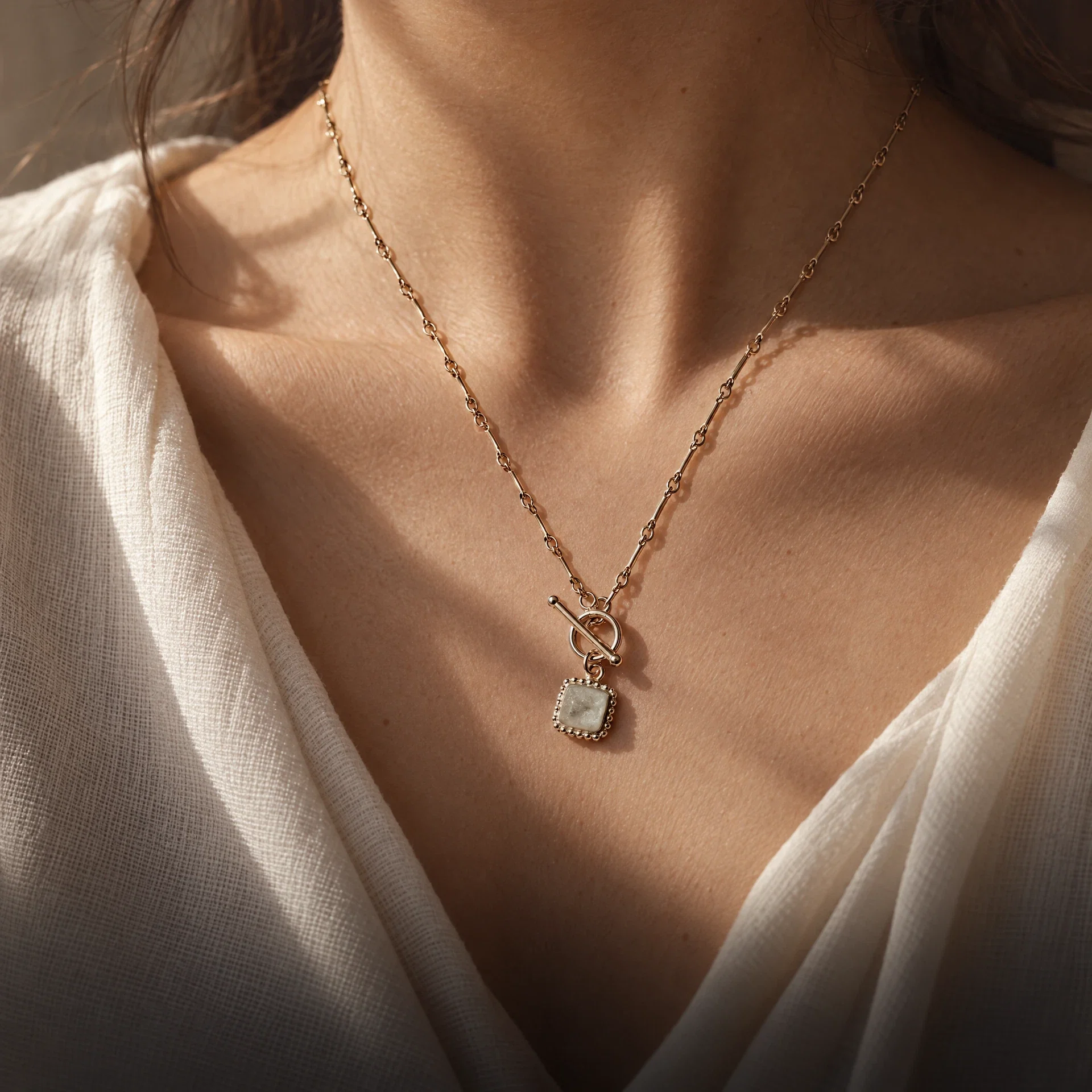
Choosing cremation jewelry can feel different from choosing any other accessory. You may be considering a piece for yourself, exploring an idea with family, or simply trying to understand what is possible. There is no correct timetable or style of remembrance. A useful first step is to separate the emotional decision from the practical questions: what you want the piece to represent, how you might wear it, and what information you need before proceeding.
This guide approaches cremation jewelry as an optional, personal keepsake rather than something everyone needs. A meaningful choice might be a discreet pendant, a ring worn occasionally, or no jewelry at all. Start by browsing the cremation keepsake information for context, then use the questions below to evaluate any design you are considering. Website imagery alone cannot establish construction, material composition, or how a piece receives memorial material.
Choose cremation jewelry around your own comfort
Before comparing shapes, consider whether you actually want cremation jewelry to contain ashes or whether symbolic remembrance would feel more appropriate. Some memorial pieces have an internal compartment; other designs incorporate material into a visible element. A conventional piece with an association, such as a meaningful shape or color, can also serve as a remembrance object without holding anything. Ask what a specific design contains rather than assuming from its name.
Think about visibility as well as appearance. For example, someone who prefers private remembrance might choose a simple pendant that does not invite questions, while another person may welcome a recognizable memorial motif. Neither preference is more sincere. With cremation jewelry, a design that feels comfortable during ordinary conversations may be easier to live with than one chosen solely because it looks striking in a photograph.
Your wearing habits provide useful decision criteria for cremation jewelry. A pendant may avoid some of the impacts and handwashing exposure a ring encounters, but its chain and clasp still matter. A ring requires careful sizing and consideration of hand activity. A bracelet moves against desks and clothing. These are practical differences, not guarantees that one format will protect memorial contents better than another.
Consider the likely setting: a quiet evening at home, occasional family gatherings, or regular wear. For example, a person whose work involves frequent glove changes might prefer a keepsake worn away from the hands. Someone who dislikes necklaces need not choose a pendant merely because it seems traditional. Look at everyday jewelry considerations to identify the shapes, lengths, and closures you already find comfortable.
If the ashes are shared among relatives, discuss consent and expectations before making arrangements. Agree who can authorize their use and whether anyone wants to retain a portion separately. Relationships and local requirements differ, so avoid assuming that one person's preference settles the question. A conversation can remain exploratory; it does not need to end in a purchase or a commitment.
Understand how cremation jewelry is constructed
The distinction between a compartment and an incorporated memorial element is central to choosing cremation jewelry. A compartment design may use a threaded opening or another closure, while an incorporated element may be set into the piece. Ask for a clear explanation of the exact design being discussed, including whether its contents can later be accessed and what work, if any, would be needed to do so.
Do not infer water resistance from words such as sealed or enclosed. For cremation jewelry, ask whether the closure is intended to be reopened, whether any adhesive is involved, and what exposure restrictions apply. A screw opening is not automatically waterproof, and a visually smooth surface does not prove that the whole piece can tolerate immersion. Written care guidance is more useful than a broad reassurance about everyday durability.
Material descriptions for cremation jewelry should cover the entire object, not just its most visible surface. Ask about the pendant body, chain, clasp, decorative setting, and any coating or memorial element separately. For example, a gold-colored pendant might be solid gold alloy, gold-filled, or plated metal; these are different constructions. Color alone cannot establish composition, and the material of a supplied chain should not be assumed to match the pendant.
In U.S. terminology, sterling silver is at least 925 parts per thousand silver. Gold-filled is not solid gold, and vermeil descriptions have specific Federal Trade Commission conditions concerning the silver base and gold layer. A hallmark may be helpful information, but it is not authenticity proof by itself. Ask for a written material description and an explanation of unfamiliar terms before using them to compare options.
There are tradeoffs beyond metal color. Surface coatings can require different maintenance from uncoated metals, and incorporated elements may have restrictions that the surrounding metal does not. Gem settings, exposed edges, and projecting details can affect cleaning and snagging. Ask how the complete piece should be treated. A material's general reputation cannot establish the performance of an individual design, especially when several materials are combined.
Photographs are useful for narrowing preferences, but request dimensions and construction details before making a final decision. A close-up can make a small pendant look substantial or conceal the depth of a setting. Explore the jewelry collections showcase as a visual starting point, not as confirmation of current availability, specifications, or which pictured designs can accommodate memorial material.
Ask practical questions before arranging cremation jewelry
Once a design interests you, put your questions about cremation jewelry in a short email. Ask D LOVE JEWELRY to confirm current options, exact materials, dimensions, closure details, and whether the proposed design can accommodate your intended keepsake. Also ask what steps would apply and who would handle the memorial material. Do not assume that filling, incorporation, engraving, or any other personalization is offered.
Before sending anything for cremation jewelry, obtain written instructions and applicable local information. Confirm what material is accepted, the required amount, preparation requirements, and any relevant handling or transport restrictions. This guide does not supply quantities, packaging directions, or mailing addresses because those details depend on the recipient's confirmed requirements and the rules that apply to your circumstances. Wait until those points are clear.
It is reasonable to ask how material would be identified, handled, and accounted for in a proposed cremation jewelry arrangement. Ask what happens to any unused portion and whether the finished piece can be altered or repaired later. These are questions to clarify, not assurances about an established process. If an answer is vague, request clarification before authorizing anything involving material that cannot simply be replaced.
A concise inquiry can make the discussion easier: I am considering a discreet pendant for occasional wear. Please confirm its materials, dimensions, opening or incorporation method, care restrictions, and any written instructions that would apply before I send memorial material. Add your own priorities rather than trying to cover every possible design. Use the email consultation contact page to ask D LOVE JEWELRY for current details.
Ask about the practical terms separately from design advice. Current costs, timing, any delivery arrangements, and any applicable cancellation or return conditions need direct confirmation. In particular, clarify what happens if you reconsider before or after any work begins. Do not treat a general website description as an agreement about your individual request, especially where personal material or a customized element might be involved.
If you are considering a gift, start with permission rather than a surprise. The intended recipient may prefer another kind of remembrance, may not want ashes divided, or may not be ready to decide. Offering to help them explore options can be kinder than selecting a finished piece. Avoid requesting or sending someone else's memorial material without a clear understanding of who can authorize it.
Care for cremation jewelry without unnecessary risk
Care for cremation jewelry should follow the most sensitive component, not just the metal surrounding it. Chemicals, fragrance, chlorine, heat, and unsuitable ultrasonic cleaning can harm some jewelry, including delicate gems, pearls, and organic or resin-based elements. Until you have design-specific guidance, avoid experimenting with jewelry dips, steam, or household cleaners. A cleaning method suitable for a plain metal chain may be unsuitable for the keepsake attached to it.
Ask whether your cremation jewelry should be removed for bathing, swimming, exercise, sleeping, or tasks involving cleaners. Unless confirmed otherwise for the particular piece, keeping it away from immersion and harsh exposure is a cautious approach. Put it on after applying fragrance and other personal-care products, and avoid leaving it near heaters or in hot vehicles. These precautions reduce avoidable exposure; they do not establish a durability guarantee.
Inspect cremation jewelry occasionally for a loose clasp, a damaged chain, a moving setting, or a closure that appears different from when you received it. If something seems wrong, stop wearing it and seek advice rather than tightening or opening it without instructions. For a compartment piece, opening the closure unnecessarily may put the contents at risk. Ask who could assess a problem and what limitations might apply.
For routine storage, keep the piece separate from harder jewelry that could scratch it or catch on its details. Choose a place where it will not be handled accidentally, and retain any confirmed material and care information alongside your records. General guidance from the GIA jewelry care resource can help explain common risks, but it does not replace instructions for a particular memorial design.
You do not have to wear a keepsake every day for it to matter. Some people reserve one for quiet moments; others decide that another object feels more natural. Give yourself permission to pause, ask more questions, or change direction. A thoughtful first choice is one you understand, feel comfortable with, and can care for according to clear instructions—not one made to satisfy an expectation about remembrance.