
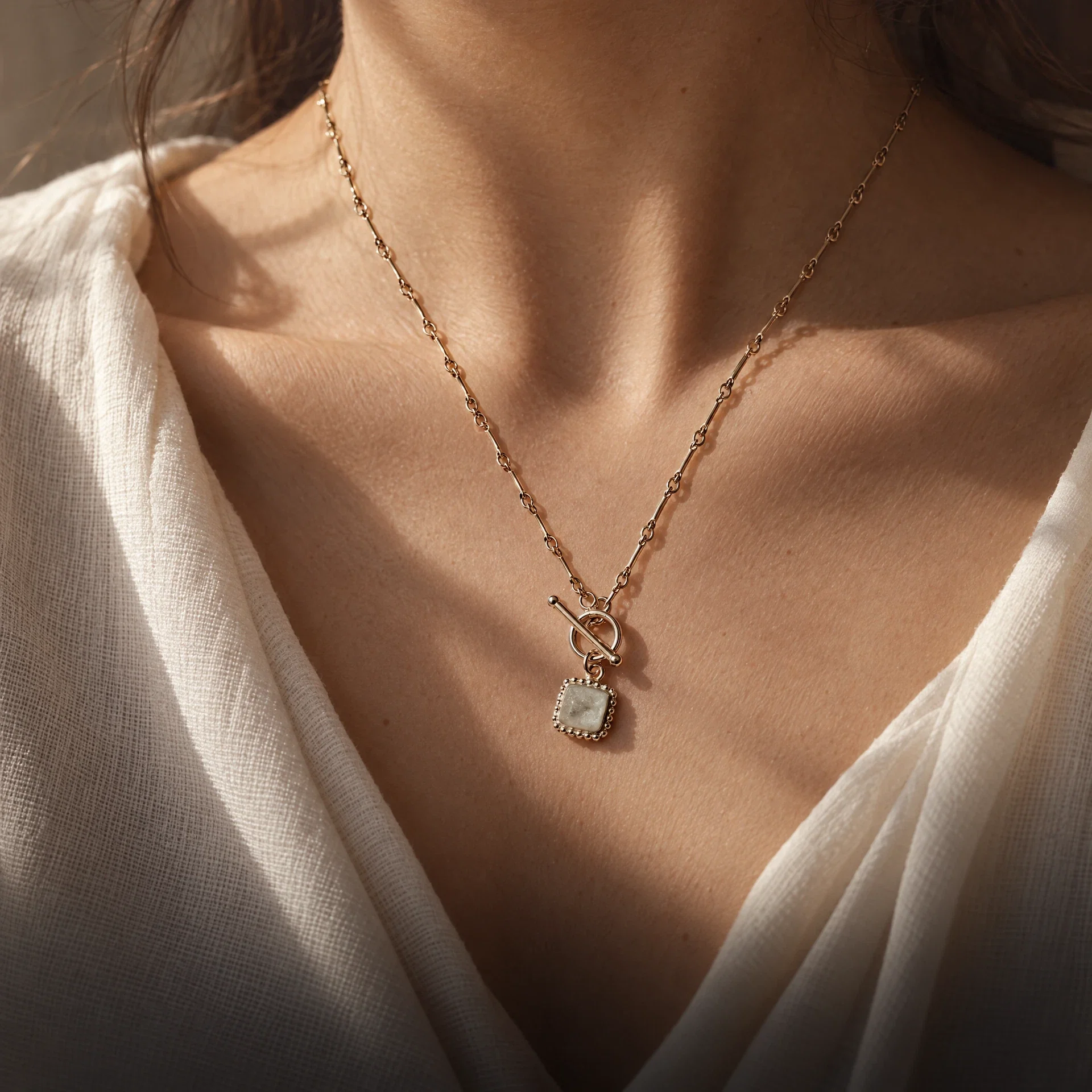
Choosing memorial jewelry gifts begins with a question more important than style: would this person welcome a wearable reminder right now? Jewelry can acknowledge a relationship, preserve a private detail, or mark an anniversary. It can also feel too intimate, too public, or too soon. The most thoughtful approach leaves the recipient free to accept, postpone, change the idea, or decline it without explaining their grief.
This guide treats memorial jewelry gifts as an invitation, not a remedy. No object can promise comfort, and wearing a keepsake is not evidence of how deeply someone loved. Your role is to notice preferences, ask gently, and remove avoidable burdens. Sometimes the best outcome is a carefully chosen necklace; sometimes it is agreeing to revisit the idea later.
1. Start with permission, timing, and the relationship
Before discussing memorial jewelry gifts, consider how close you are to the recipient and to the person or animal being remembered. A partner may know whether a name feels comforting; a colleague probably does not. When that knowledge is uncertain, offer a choice rather than making an intimate decision on someone else's behalf.
A low-pressure opening might be: “I was thinking about a small keepsake to remember your dad. Would that feel welcome, or would you rather I leave the idea for now?” Ask privately and allow time for an answer. Avoid presenting a photograph, engraving, or material sample unexpectedly at a gathering where the person may feel obliged to respond positively.
The timing of memorial jewelry gifts should follow the recipient, not a fixed calendar. A birthday or death anniversary may make a gesture meaningful, but it can also make decision-making harder. Someone managing arrangements, paperwork, or family conversations may not want another task. Asking several weeks ahead gives them room to consider the idea without a ceremonial deadline.
Make declining genuinely easy
Permission is not meaningful if refusal creates awkwardness. Say explicitly that nothing has been ordered or committed, if that is true. Do not suggest that the recipient needs a keepsake for closure. If they hesitate, offer to stop the conversation rather than asking repeated questions about which design they prefer.
When memorial jewelry gifts involve cremated remains, consent must cover more than the appearance of the piece. Discuss whether the recipient wants remains incorporated at all and who has authority to provide them. Family expectations and applicable local requirements may matter. A symbolic design without remains can be an equally personal option, especially when relatives disagree.
Group-funded memorial jewelry gifts need one trusted coordinator, a private conversation with the recipient, and an agreed limit on decisions. Contributors should not vote on intimate details against the wearer's wishes. Avoid collecting money before the person has accepted the idea and the relevant arrangements have been clarified. A shared letter may be more welcome than a shared purchase.
2. Choose meaning without making the piece overwhelming
The strongest memorial jewelry gifts often use one meaningful detail rather than several obvious symbols. For example, a simple pendant with a discreet initial could suit someone who wants privacy. A visible name might suit someone who enjoys speaking about the person they lost. Neither choice is more sincere; they serve different ways of remembering.
Start with the recipient's existing jewelry. Do they wear necklaces daily, remove rings while working, or avoid bracelets because they catch on clothing? Consider clasp handling, chain length, pendant weight, and whether the piece might interfere with work or hobbies. These practical details determine whether a meaningful object feels comfortable or becomes another item kept in a drawer.
For personalized memorial jewelry gifts, check every character against a reliable reference. Confirm whether the person used a nickname, middle name, or particular spelling. Dates can introduce ambiguity across regional formats, so spelling out a month may help if space permits. Ask to review the proposed text and layout before any irreversible work, without assuming that such review is available.
Match the level of visibility
A private inscription can keep meaning close without inviting questions from strangers. An openly memorial design may help someone share memories, but it can also lead to conversations they did not choose. For example, a flower associated with a loved one's garden might feel gentler than an explicit memorial phrase to a recipient who values discretion.
Symbolic memorial jewelry gifts offer flexibility when photographs, dates, or remains feel too personal. A shape connected with a shared walk, a favorite color, or an understated motif can carry meaning without documenting the loss. Be careful with religious symbols: choose them only when you know they reflect the recipient's beliefs, rather than your own interpretation of comfort.
Looking through the jewelry collection showcase can help you describe a preferred visual direction, but it does not establish current availability or customization options. For memorial jewelry gifts, send a short description of the intended meaning and ask D LOVE JEWELRY to confirm current details. A reference image or written idea should begin a conversation, not imply a promised result.
3. Clarify materials, boundaries, and practical care
Materials matter because memorial jewelry gifts may be worn often and valued beyond their replacement cost. Ask for the exact metal description, any surface coating, stone or inclusion information, and care limitations. A familiar color is not a material specification. If the recipient has known sensitivities, request relevant composition information rather than relying on general claims of suitability.
Solid gold and gold-filled are not interchangeable descriptions. Sterling silver contains at least 925 parts per thousand silver, while vermeil descriptions have specific U.S. FTC conditions concerning the base metal, gold fineness, and coating thickness. A hallmark can provide useful information, but it is not proof of authenticity on its own. Request clear written descriptions when the distinction affects your decision.
For cremation-based memorial jewelry gifts, first establish whether the recipient actually wants an inclusion piece. The cremation jewelry information page can provide a starting point for questions, but obtain written instructions before sending anything. Confirm applicable local information, who may authorize the transfer, and what happens to any unused material. Do not improvise quantities, preparation, packaging, or mailing arrangements.
Consider reversibility and care demands
A conventional engraved piece and a keepsake containing personal material involve different commitments. Ask whether a detail can later be altered, whether an inclusion is accessible, and what repair might involve; do not assume any answer. Some recipients prefer a symbolic object precisely because it avoids transferring irreplaceable material. Others may value inclusion enough to accept greater care responsibilities.
Daily wear is not automatically the best use for memorial jewelry gifts. Chemicals, fragrance, chlorine, heat, and unsuitable ultrasonic cleaning can harm some jewelry, including pearls, delicate gems, and organic or resin-based pieces. Until material-specific guidance is confirmed, avoid exposing a keepsake to those conditions. Ask what cleaning method is appropriate rather than treating every pendant like a plain metal chain.
Care should make memorial jewelry gifts easier to keep, not create anxiety. Request written guidance covering cleaning, storage, removal during activities, and any material-specific restrictions. The everyday jewelry showcase may help frame questions about wearability, but cannot establish that a particular keepsake suits continuous wear. If the recipient prefers occasional use, respect that as a valid choice.
4. Give the keepsake without creating an obligation
Present memorial jewelry gifts in a quiet setting where the recipient can respond naturally. A short note is usually enough: “I hoped this could hold a small reminder of your sister. There is no expectation to wear it, and we can talk about another option if you prefer.” Avoid requiring an immediate opening, photograph, or public acknowledgment.
Keep the note focused on the relationship rather than a promised emotional outcome. Mention one specific memory if it is yours to share: her habit of bringing flowers, his favorite walking route, or the pet who always waited at the door. Do not claim to know exactly how the recipient feels or describe the object as something that will heal them.
Surprise memorial jewelry gifts carry a practical risk when a personalized detail cannot be changed. Before committing, ask about current costs, proposed specifications, approval steps, and whether changes or returns are possible. D LOVE JEWELRY should confirm its current arrangements directly; the showcase alone is not confirmation of ordering, payment, personalization, or return options.
Keep the follow-through simple
Use the email consultation contact page to ask focused questions without sharing more personal information than necessary. A useful first message might describe the preferred jewelry type, whether the meaning should be discreet, and any known material restrictions. Wait for confirmed instructions before providing sensitive images, handwriting, or information about personal materials.
After giving memorial jewelry gifts, let the recipient decide whether to discuss or wear them. Do not ask repeatedly why the piece is absent or whether it has helped. Their relationship with a keepsake may change over time. Offer practical help only if wanted, such as keeping the care instructions together or revisiting an unresolved design question.
The purpose of memorial jewelry gifts is to acknowledge someone and leave space for the person remembering them. A careful question, a modest design, and a clear absence of obligation can matter more than elaborate personalization. If jewelry is not welcome, honor that answer. Listening, sharing a memory, or simply staying in touch can be the more thoughtful gift.