
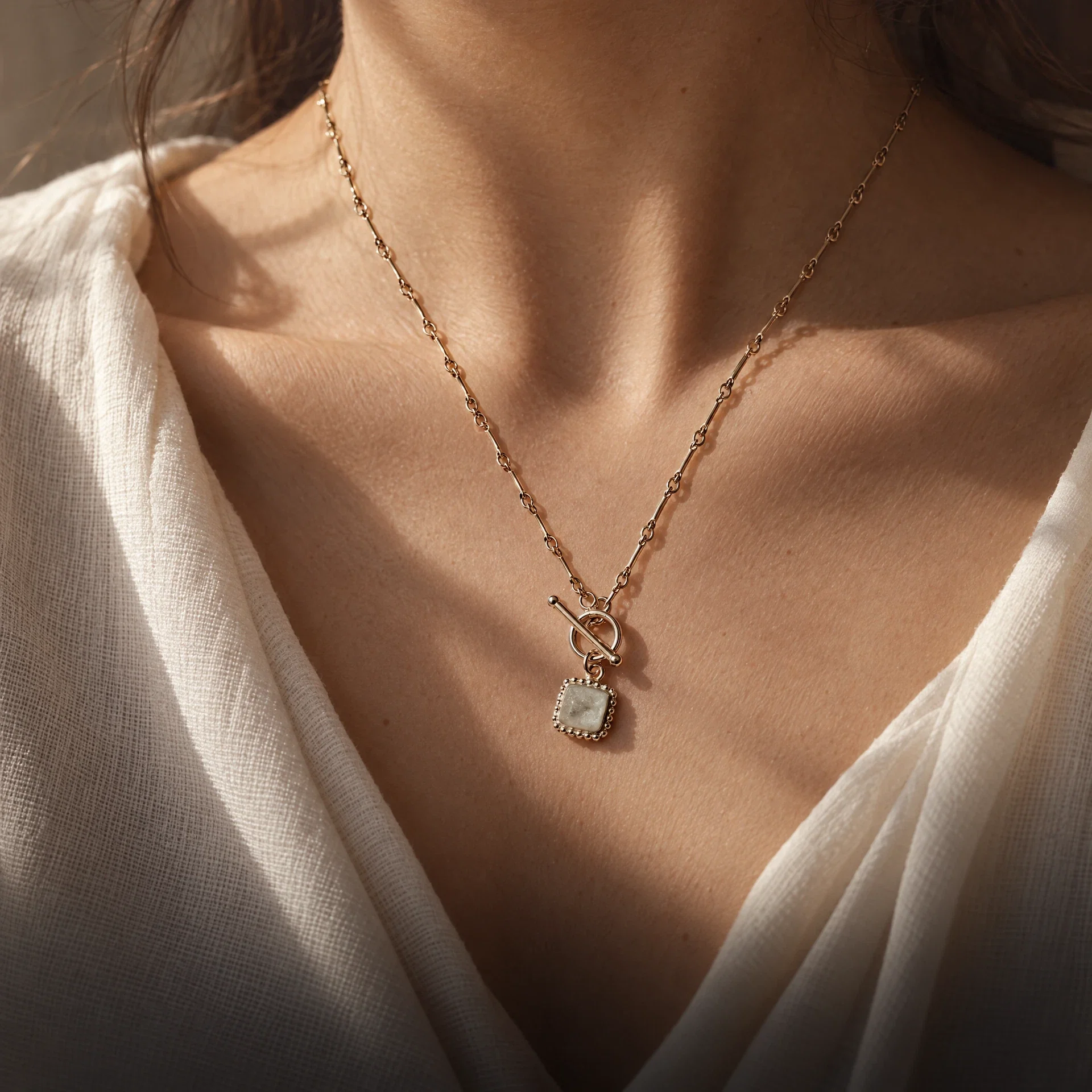
Choosing pet memorial jewelry can begin with a small, specific memory: the sound of a collar tag, a favorite sleeping place, or the shape of a paw resting in your hand. A tribute need not explain your loss to anyone else. It can be recognizable, private, or simply comfortable enough to wear when you want that connection nearby. The most useful starting question is not which design looks most impressive, but which detail feels genuinely connected to your companion.
There is no timetable for choosing pet memorial jewelry, and there is no obligation to choose it at all. Some people want a visible reminder immediately; others prefer to wait until everyday routines feel less unfamiliar. You may also discover that a piece kept in a jewelry box feels more appropriate than something worn daily. Before looking closely at designs, decide whether you want a symbol, a written detail, or a keepsake containing a small physical memento.
Start with the memory, not the motif
The most personal pet memorial jewelry often reflects an ordinary habit rather than a standard memorial symbol. For example, a small crescent might recall a cat curling into sleep, while a simple oval could echo a dog's familiar identification tag. A bird, rabbit, horse, or reptile deserves the same thoughtful specificity. Paw motifs can be meaningful, but they are not a requirement, and they may not suit the animal you are remembering. Choose a detail you recognize without needing an explanation.
Consider how openly you want pet memorial jewelry to communicate its meaning. A name and date on the front invite questions; an initial on the reverse keeps the tribute more private. Neither approach is more loving. Think about work, social occasions, and moments when you may not want to discuss the loss. A discreet inscription or abstract shape can offer personal significance without making your experience the subject of conversation. If engraving matters, ask what placement and legibility are feasible.
Words deserve particular care when planning pet memorial jewelry. A nickname may feel warmer than a registered name, and a familiar phrase may hold more meaning than a formal date. Short inscriptions are usually easier to read than crowded ones, but the usable space depends on the actual design. Write your proposed wording at approximately the intended scale before deciding. Check spelling, punctuation, and date format separately; emotional significance does not prevent a small transcription error from becoming frustrating later.
It helps to separate essential details from optional ones before discussing pet memorial jewelry with a designer or brand. For example, your essentials might be a discreet initial and a smooth pendant, while a birthstone color remains optional. This makes it easier to evaluate alternatives without losing the central idea. You can browse the jewelry collection showcase for visual direction, but a displayed style should not be taken as confirmation that a particular modification, material, or commission is currently offered.
- Essential: the detail that makes the tribute feel like your companion.
- Preferred: a shape, finish, or color you would enjoy wearing.
- Flexible: elements you can change without losing the meaning.
- Unsuitable: anything that feels uncomfortable, too public, or difficult to care for.
Decide whether to include a physical keepsake
Symbolic pet memorial jewelry and jewelry containing a physical memento answer different wishes. A symbolic piece may use engraving, an outline, or a meaningful color without holding any remains. A keepsake piece may involve ashes or another personal inclusion, depending on what its maker actually offers. Do not assume that every memorial pendant has a compartment or that every decorative surface can incorporate a material. Ask for a clear description of the proposed construction before deciding whether it suits your intentions.
If ashes are part of your plans for pet memorial jewelry, distinguish between a fillable compartment and an inclusion incorporated into a decorative element. These approaches can differ in access, closure, appearance, and future maintenance. Ask whether the compartment is intended to be reopened, who handles filling, and what happens if the closure needs attention. The cremation keepsake information page can provide a starting point for discussion, but D LOVE JEWELRY should confirm any current options and procedures directly.
Before sending any material for pet memorial jewelry, obtain written instructions from the intended recipient and check applicable local requirements. Do not estimate quantities from photographs, use another maker's instructions, or assume ordinary postal arrangements are appropriate. Clarify how any unused material would be handled and what records identify your submission throughout the process. If the thought of transferring a memento feels uncomfortable, a symbolic design remains a complete tribute rather than a compromise that needs justification.
Appearance is another important consideration for pet memorial jewelry with inclusions. Ask whether the material would be visible, concealed, or represented through a particular finish, and whether reference photographs are illustrative rather than predictions of your result. Physical materials and small-scale details may not look exactly alike from piece to piece. Request clear information about limitations without expecting a guaranteed visual match. If you have only a small or irreplaceable memento, consider reserving it until you understand the proposed handling fully.
Questions worth resolving in writing
- What kind of inclusion, if any, is appropriate for the proposed design?
- What preparation and handling instructions apply before anything is sent?
- How would unused material, identification, and recordkeeping be managed?
- What are the limitations on appearance, repair, alteration, and future access?
Choose for your real wearing habits
A meaningful piece of pet memorial jewelry should fit the way you move through a normal day. A pendant may be easier to remove before cleaning or exercise, while a ring is more exposed to handwashing, knocks, and contact with surfaces. A bracelet can remain visible to you but may catch on sleeves or rest against a keyboard. These are practical differences, not rankings. Picture the piece during your actual routine rather than only in a photograph or on a display.
Comfort details matter especially when pet memorial jewelry is intended for frequent wear. Consider pendant weight, chain length, clasp size, and whether edges could rub against skin or fabric. For rings, width and profile can change how a familiar size feels; a broad band may fit differently from a narrow one. Ask about measurements and any fitting guidance available. The everyday jewelry guidance is a useful place to consider wearability, while specific construction and adjustment possibilities still need confirmation.
Material descriptions for pet memorial jewelry should be precise enough to support an informed choice. Gold-filled is not solid gold, and a surface finish should not be confused with the underlying metal. Sterling silver is at least 925 parts per thousand silver; vermeil descriptions have specific U.S. Federal Trade Commission conditions concerning the silver base and gold coating. A stamp or hallmark alone is not proof of authenticity. Ask for the base metal, any coating, and the care requirements for the complete piece.
A budget for pet memorial jewelry can be guided by use rather than by the assumption that a more expensive tribute means greater love. Decide what you are comfortable spending before discussing a design, then ask D LOVE JEWELRY to confirm current details relevant to your request. Depending on the proposal, questions may include engraving, sizing, specialist handling, or future maintenance. Do not assume that these are offered or included. A simple symbolic piece can be every bit as personally significant as an elaborate keepsake.
Plan for care, conversations, and changing needs
Care for pet memorial jewelry depends on all its components, not just the metal you can see. Chemicals, fragrance, chlorine, heat, and unsuitable ultrasonic cleaning can harm some jewelry, including pearls, delicate gems, and organic or resin-based elements. Obtain instructions specific to the finished piece before cleaning it. Avoid treating an unfamiliar keepsake with a standard jewelry dip or aggressive polishing method. When construction is uncertain, set the piece aside and ask rather than experimenting with a treasured object.
For frequently worn pet memorial jewelry, establish a simple removal routine around activities that could expose it to impact, moisture, or chemicals. Store it separately so that chains do not tangle and harder pieces do not scrape softer surfaces. A compartment or inclusion does not automatically make a piece waterproof, permanently sealed, or suitable for every activity. Ask how closures should be checked and whether any professional inspection is advised, without assuming a particular maintenance service or interval exists.
When giving pet memorial jewelry, permission is usually more considerate than surprise. A recipient may prefer a different symbol, may not want to wear a tribute, or may wish to keep all physical mementos untouched. You could offer to help explore possibilities without selecting anything immediately. If discussing a commission, use the D LOVE JEWELRY consultation contact page to ask about current details; let the person remembering their companion control the wording, timing, and degree of participation.
Your relationship with pet memorial jewelry may change over time. You might wear it daily for a period, reserve it for particular occasions, or eventually keep it with photographs and other reminders. None of those choices reduces its meaning. A well-considered tribute leaves room for those changes: it reflects a memory you value, suits your comfort, and comes with clear information about its materials and care. Choose only when the idea feels right, and allow simplicity, privacy, and patience to be part of the decision.