
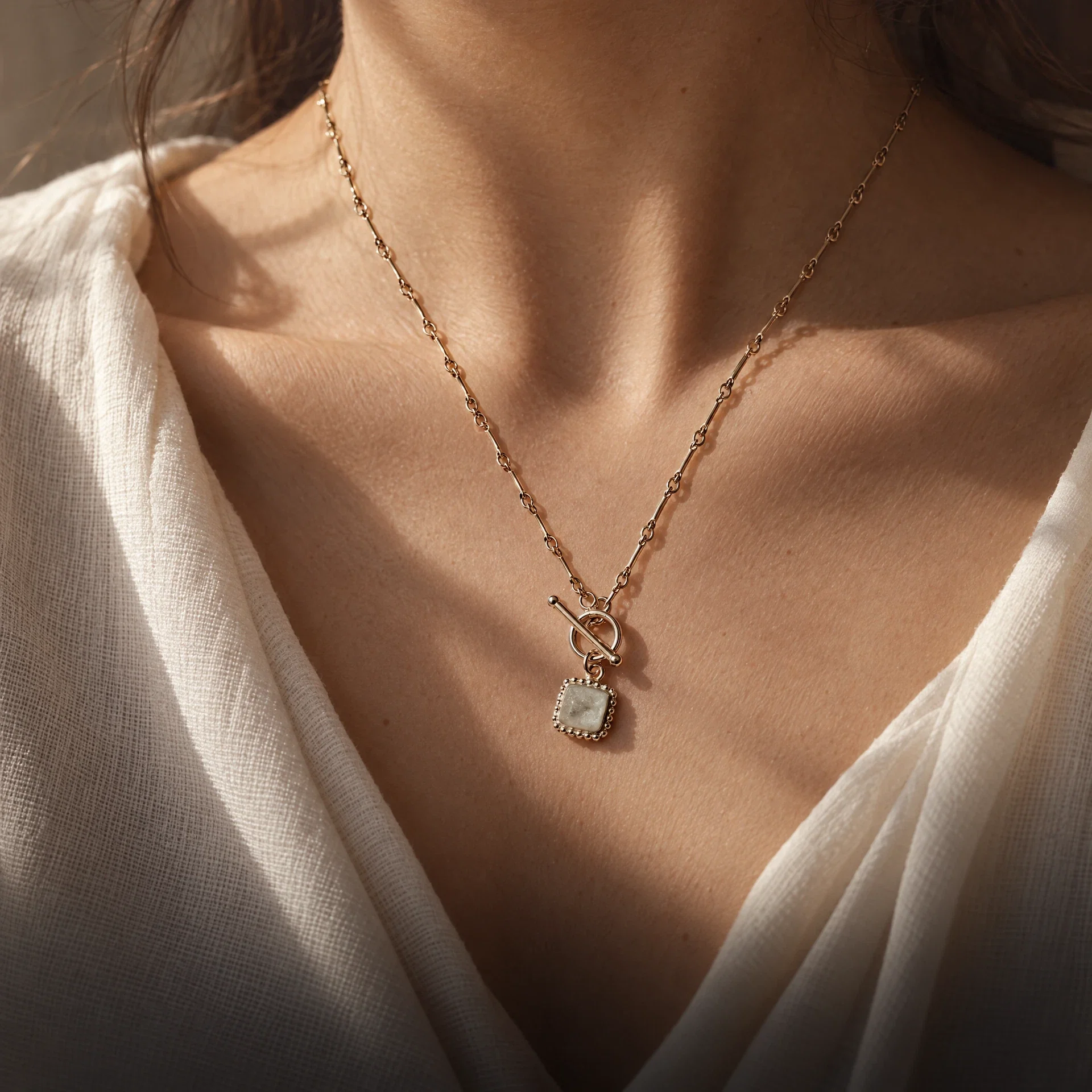
Choosing remembrance jewelry begins with a personal question: what would you like this piece to hold in mind? It might acknowledge someone who died, preserve a family connection, mark a pregnancy or feeding journey, or remember a place that shaped your life. The meaning can be obvious, quietly coded, or known only to you. A useful choice brings together that meaning with practical realities: how the piece feels, where you will wear it, and how much care you are comfortable giving it.
There is no single correct appearance for remembrance jewelry. A plain band may carry more significance than an elaborate pendant, and an inherited piece may feel more appropriate than something newly chosen. You also do not have to wear a keepsake every day for it to matter. Before considering designs, separate three decisions: the story you want to remember, the degree of privacy you want, and the physical format that suits your life. Those decisions can prevent decorative details from taking over.
Choose a symbol that belongs to the story
The strongest symbols in remembrance jewelry often come from ordinary shared experiences rather than a universal vocabulary of loss. For example, a leaf could recall weekend walks, a small star could refer to a familiar bedtime phrase, and a circle might suggest an ongoing family connection. These are examples, not fixed interpretations. Write down two or three concrete memories before browsing designs. A remembered gesture, nickname, or landscape may suggest a more personal direction than a symbol chosen because it seems conventionally appropriate.
Familiar motifs can still make thoughtful remembrance jewelry, provided their associations feel right to the wearer. Hearts may express affection; knots may suggest connection; wings may carry spiritual meaning for some people. None of those meanings is universal. Religious imagery deserves particular care when choosing for someone else, as does symbolism connected with pregnancy or infant loss. If you are unsure, ask about preferred imagery without requiring the recipient to recount painful details. A neutral shape can leave room for their own interpretation.
Privacy is a design feature of remembrance jewelry, not merely a question of taste. A visible name or date may invite questions, while an initial on the reverse of a pendant can keep the story less public. Consider where an inscription sits when worn, whether a locket opens easily, and whether a symbol could be mistaken for something you would rather not explain. For example, a tiny coordinate reference may represent a family home without displaying a person's full name or the circumstances of a loss.
When several memories matter, remembrance jewelry does not have to contain all of them at once. Combining multiple dates, stones, initials, and motifs can make a small surface crowded or difficult to read. Choose one primary element and, if needed, one supporting detail. A flower outline paired with a short initial may communicate more clearly than a long inscription. Explore the collection showcase for visual reference, but ask D LOVE JEWELRY to confirm any design, inscription, or customization details rather than assuming those options are offered.
Turn a memory into details you can live with
An inscription can give remembrance jewelry a precise connection, but its usefulness depends on length, placement, and readability. Start with the shortest wording that preserves the meaning: a nickname, a few familiar words, or one date. Check spelling, punctuation, and date order carefully, especially when different countries use different formats. Ask whether a proposed inscription would remain legible at the actual size and whether it would sit against the skin. Do not assume a phrase shown in an example can be reproduced on every design.
Color can make remembrance jewelry meaningful without requiring a traditional birthstone. A blue accent might recall a favorite scarf; green might reference a garden. If you do choose a birthstone, decide whether the calendar association or the appearance matters more. Stones connected with the same month may differ in hardness, care needs, and cost, and color alone does not identify a gem. Ask what the material actually is, including whether it is natural, laboratory-grown, imitation, or treated, and what those details mean for care.
The physical form of remembrance jewelry should support the way you want to encounter the memory. A pendant sits close to the body but may swing or catch during movement. A ring remains within your own view but receives frequent contact with surfaces, soap, and water. A bracelet can be easy to notice throughout the day, though clasps and dangling elements may interfere with work. Earrings offer another form, but individual pieces can become separated. Consider your routine before making symbolism the only deciding factor.
Scale and texture deserve the same attention as the story in remembrance jewelry. A raised setting can catch on knitwear; an openwork motif may collect residue; a heavy pendant may feel distracting on a fine chain. Ask about dimensions, weight, fastening, and edges, and use a similarly sized object to imagine the footprint if you cannot view a piece in person. The everyday jewelry page can provide styling context, but appearance alone cannot establish comfort or suitability for continuous wear.
- For frequent wear: prioritize a manageable size, secure fastening, and care requirements compatible with your routine.
- For private remembrance: consider a discreet symbol or an inscription placed out of direct view.
- For occasional wear: think about protective storage and whether the piece works with the clothing you usually choose.
- For a shared family story: allow each person a different form rather than expecting identical preferences.
Approach sensitive keepsakes and gifts without pressure
Some remembrance jewelry incorporates cremation material, while other pieces refer to a person through imagery or engraving alone. These approaches are not interchangeable emotionally or practically. Before considering an inclusion piece, decide whether you are comfortable entrusting any material and whether other family members need to be consulted. The cremation keepsake information page is a starting point for questions, not a substitute for confirmed arrangements. Ask D LOVE JEWELRY to clarify the current details and whether the approach you have in mind is possible.
For inclusion-based remembrance jewelry, obtain written instructions before preparing or sending anything. Those instructions should clarify what material can be accepted, how it would be identified and handled, and what happens to anything not incorporated. Ask what method is proposed, what limitations apply, and whether the completed piece can be altered or repaired. Consult applicable local information before transferring cremation material. Do not infer quantities, packaging requirements, mailing addresses, or transport permissions from general examples, and do not proceed while important questions remain unanswered.
Breast-milk keepsakes can also function as remembrance jewelry, marking a feeding relationship, a transition, or a deeply personal period of family life. They need not represent bereavement. The breast-milk keepsake information page may help frame an inquiry, but any proposed material preparation, inclusion method, or care requirement needs direct confirmation. Ask for written instructions before sending milk or other personal material. There is no obligation to preserve a physical substance: a date, symbolic color, or existing piece can acknowledge the same experience.
Giving remembrance jewelry requires permission as much as thoughtfulness. A surprise may feel welcome to one person and burdensome to another, especially when it includes remains, intimate material, or a public inscription. Consider asking, “Would a small keepsake feel meaningful, or would you prefer something else?” Leave room for an honest refusal or a later decision. Avoid framing the gift as something that will heal grief or provide closure. If the recipient wants a piece, invite them to choose its symbolism and how openly it tells the story.
Confirm materials, care, and the questions that matter
Material descriptions help you judge remembrance jewelry more accurately than color or appearance alone. Gold-filled is not solid gold, and a gold-colored surface does not tell you the underlying metal. Sterling silver is at least 925 parts per 1,000 silver. In U.S. guidance, vermeil descriptions have specific FTC conditions, so ask for the underlying metal, gold fineness, and coating details rather than treating the term as interchangeable with all gold plating. A stamped mark is useful information, but it is not proof of authenticity by itself.
Care for remembrance jewelry should follow the confirmed materials and construction, not a universal cleaning recipe. Chemicals, fragrance, chlorine, and heat can harm some jewelry, and unsuitable ultrasonic cleaning can damage delicate gems, pearls, or organic and resin-based components. Remove a piece before activities that could expose it to those conditions when appropriate to its care instructions. Avoid soaking an unfamiliar keepsake or experimenting with polishing compounds. Ask which cleaning method is suitable, whether moisture must be avoided, and how to protect any inscription, coating, or enclosed material.
Storage and repair planning can protect the practical value of remembrance jewelry without promising permanence. Keep pieces separated to reduce rubbing, and follow material-specific storage advice. Periodically look for a loose fastening, worn connection, or shifting setting; stop wearing a piece if something seems insecure. For an inherited item, seek an assessment before altering it, because resizing or engraving may affect existing details. Photograph inscriptions and record what you know about the materials and family history, while remembering that documentation does not guarantee future repair options.
Before committing to remembrance jewelry, bring a concise set of questions to the D LOVE JEWELRY email consultation contact: what materials and dimensions are proposed, what design details can be confirmed, what care is required, and what limitations should you understand? Request current information about any relevant process or policy rather than relying on assumptions. The right outcome may be a simple new piece, a carefully preserved heirloom, or no jewelry at all. Personal meaning does not depend on complexity, public recognition, or making a decision immediately.