
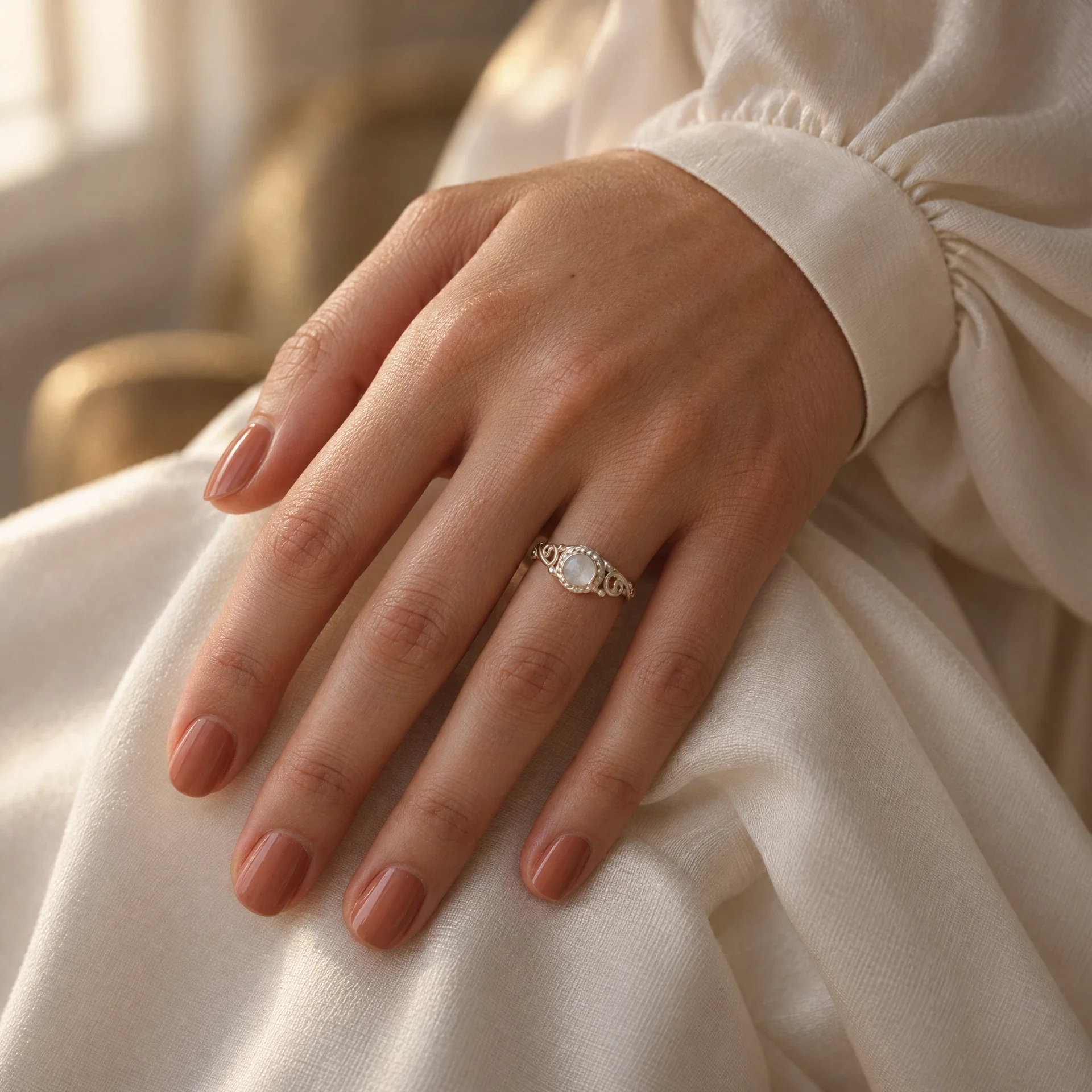
A breastfeeding keepsake can mark a chapter of motherhood without requiring you to decide what that chapter means right now. You might be feeding regularly, approaching weaning, or looking back on an experience that ended differently from what you expected. None of those situations creates an obligation to commission jewelry. A slower plan gives you room to consider the memory, the practical responsibilities, and whether a wearable object actually suits you.
The most useful starting point is not a ring size or a pendant shape. It is separating three decisions: whether you want a breastfeeding keepsake, what you would like it to represent, and what information you need before proceeding. These decisions can happen weeks or months apart. Gathering information is not a commitment, and choosing not to make anything is also a valid outcome.
Give Your Breastfeeding Keepsake a Purpose Before a Deadline
Begin with a private sentence about the experience you want to remember. It could be “the quiet mornings we shared,” “the effort I put into feeding,” or “a transition I am still understanding.” These are examples, not meanings you need to adopt. Feeding experiences can include affection, exhaustion, uncertainty, and relief at the same time. You do not have to simplify those feelings into a celebratory message just because the object will be beautiful.
Consider whether a breastfeeding keepsake feels right for you personally, rather than whether it seems like something mothers are expected to want. Some people enjoy having a tangible reminder close to them; others prefer photographs, a journal entry, or no permanent object. If jewelry feels premature, write down the idea and revisit it later. The goal is to preserve your freedom to choose, not to turn a personal milestone into another task on an already crowded list.
A gentle planning timeline can use checkpoints instead of a purchase deadline. First, decide whether you want information. Next, collect answers about materials and any required handling. Then compare designs against your routine. Finally, pause before making a commitment. A birthday or the end of feeding may be a useful reference point, but it should not force a breastfeeding keepsake decision before you understand the practical details. Avoid assuming that waiting is harmless for any material you already hold; obtain relevant storage guidance separately.
If someone else hopes to give you a breastfeeding keepsake, clarify whose preferences lead the decision. A partner might love the idea of a visible pendant while you would prefer something private, or nothing at all. A supportive offer can be as simple as helping you gather questions and leaving the final choice with you. No one should collect, handle, or send your milk without your knowledge and agreement. Consent matters even when the intention is affectionate.
Choose a Form That Fits Your Actual Routine
Before comparing decorative details, look at when you realistically wear jewelry. Do you remove rings for work? Do you often carry a child against your chest? Do bracelets catch on sleeves? These everyday observations are useful design filters for a breastfeeding keepsake. A piece intended for occasional wear may need different qualities from one you hope to wear frequently. Neither approach is more meaningful; the best choice is the one that matches your habits without creating avoidable frustration.
For example, someone who rarely wears necklaces might prefer a ring for selected occasions, while someone who dislikes anything on their hands might consider a pendant. A raised setting may look appealing but can catch on fabric; a longer chain can move more against clothing. These are general design tradeoffs, not descriptions of D LOVE JEWELRY products. You can browse the everyday jewelry showcase to identify visual preferences, then ask which design details are relevant to your intended use.
Decide how visible you want the personal meaning to be. Your breastfeeding keepsake does not need to communicate its story to everyone who sees it. An understated design may feel comfortable in professional settings or during ordinary errands. A more noticeable piece may suit someone who enjoys conversation about meaningful jewelry. Think about whether you want to explain it repeatedly, selectively, or never. That answer can guide scale and styling more reliably than a trend or someone else's enthusiasm.
Material descriptions deserve their own questions. Gold-filled is not solid gold, and sterling silver is at least 925/1000 silver. Vermeil terminology has specific FTC conditions in the United States; it is not simply a loose synonym for any gold-colored finish. A hallmark can be useful information but is not, by itself, proof of authenticity. For a breastfeeding keepsake, ask for the precise metal description and information about the incorporated material rather than relying on photographs, color, or a broad label such as “gold.”
Set a comfortable spending boundary before discussing elaborate options. Include any costs that would need confirmation, such as design changes or future maintenance, without assuming they apply. When reviewing the collection showcase, treat images as inspiration rather than evidence of current availability or price. If a breastfeeding keepsake would strain your budget, pause or simplify your plan. Emotional significance does not increase with the amount spent, and an information-only consultation should not become a reason to stretch your finances.
Get Written Answers Before Sending Personal Material
The practical side should begin with confirmation, not preparation. Use the breast-milk keepsake information page as a starting point, then ask D LOVE JEWELRY to confirm the current details relevant to your request. Do not assume that a pictured design can currently be made, that your material can be accepted, or that a particular method is used. A breastfeeding keepsake involves personal material, so clear written answers matter more than filling gaps with advice from unrelated websites.
Before sending anything, request written instructions covering what can be accepted, any preparation requirements, and the applicable handling arrangements. Seek applicable local information as well, particularly if transport would cross a regional or national boundary. Do not choose a quantity, container, address, or mailing method based on this article. Advice for feeding-related milk storage should not be treated automatically as instructions for a breastfeeding keepsake. If you already have stored material, describe its circumstances and ask whether it is suitable; do not assume acceptance.
A useful consultation message can stay short while identifying your priorities: “I am considering a pendant for occasional wear, and I would like written information before deciding. Could you confirm the material options, whether my request can be accommodated, and what instructions would apply?” You can also ask what happens to any unused supplied material and how that is documented. These are questions to clarify, not statements about an existing D LOVE JEWELRY process or policy.
- What exact materials would the finished piece contain?
- What appearance choices can be discussed, and what variations should I expect?
- What written instructions must I follow before sending anything?
- What current costs, timing, and commitment steps would apply?
- What care guidance and future support, if any, would be provided?
Ask how much control you would have over the appearance of your breastfeeding keepsake. Images may not convey scale, texture, translucency, or color accurately, and an example should not be understood as a promise of an identical result. Clarify what can be specified and what cannot. If a particular visual outcome is essential to you, explain it before making a commitment. Uncertainty is easier to evaluate when it is acknowledged plainly rather than hidden behind attractive photographs.
Keep the answers together in one note so you can review your breastfeeding keepsake plan without restarting the conversation. Record what has been confirmed, what remains unresolved, and what you are not ready to decide. Use the email consultation contact page for follow-up questions. If an answer is ambiguous, ask again in simpler terms. Written clarification protects your understanding; it does not need to sound demanding or turn a gentle personal project into a formal interrogation.
Plan for Care, Pauses, and Changing Feelings
Care requirements belong in the decision, not after it. A breastfeeding keepsake may combine materials with different sensitivities, so general advice for metal jewelry may not suit the whole piece. Chemicals, fragrance, chlorine, heat, and unsuitable ultrasonic cleaning can harm some jewelry, pearls, delicate gems, and organic or resin-based components. Ask for guidance specific to the proposed construction, including cleaning and storage. Do not assume that daily wear, showering, or swimming is appropriate simply because the piece looks substantial.
Think through a realistic removal routine. If you would take off your breastfeeding keepsake before certain activities, where would it go? A designated place away from children is more practical than leaving jewelry on a bathroom edge or beside a sink. Ask whether separate storage is advisable to reduce contact with other pieces. Avoid improvising with solvents, household cleaners, or cleaning machines. If you cannot obtain clear care instructions, that is a reasonable reason to delay your decision.
Leave space for your feelings to change after the piece exists. You might wear it often at first, then put it away, or keep it private until a later stage of life. A breastfeeding keepsake does not have to become a daily symbol to remain meaningful. Nor does wearing it need to make you feel grateful, healed, or certain about your experience. It can simply be an object connected to one part of your story, without representing the whole of motherhood.
Before proceeding, check that the essential questions are answered: you want the object, the design suits your routine, the materials are clearly described, and any handling and care instructions are in writing. If one part remains unsettled, pause there rather than forcing a final decision. Planning a breastfeeding keepsake slowly is not a lesser way to honor the experience. It is a way to give the memory, your resources, and your present needs equal consideration.